What is a Power Angle Curve?
The power angle is the voltage angle difference between two locations (buses) in a power system.
From steady-state power system theory power transfer is possible up to a power angle of 90°.
However practical system stability requires operating well below this limit as stability margins reduce significantly at the higher angles.
A lower power angle indicates a more stable and resilient system while higher power angles increase the risk of instability following disturbances.
Therefore system operators should use to maintain power angles as low as reasonably possible (between 30° and 45°) to improve the overall system stability by having buffer to absorb the energy of the disturbance.
Operator actions that help maintain a low power angle include:
1). Maintaining system voltage near the upper end of the permissible stability margin, which improves power transfer capability and reduces angular stress.
2). Reducing network impedance by keeping maximum transmission lines in service, as long as this does not violate system security and operating guidelines.
While 90° is a theoretical stability limit low power angle operation provides the real margin that keeps the grid secure.
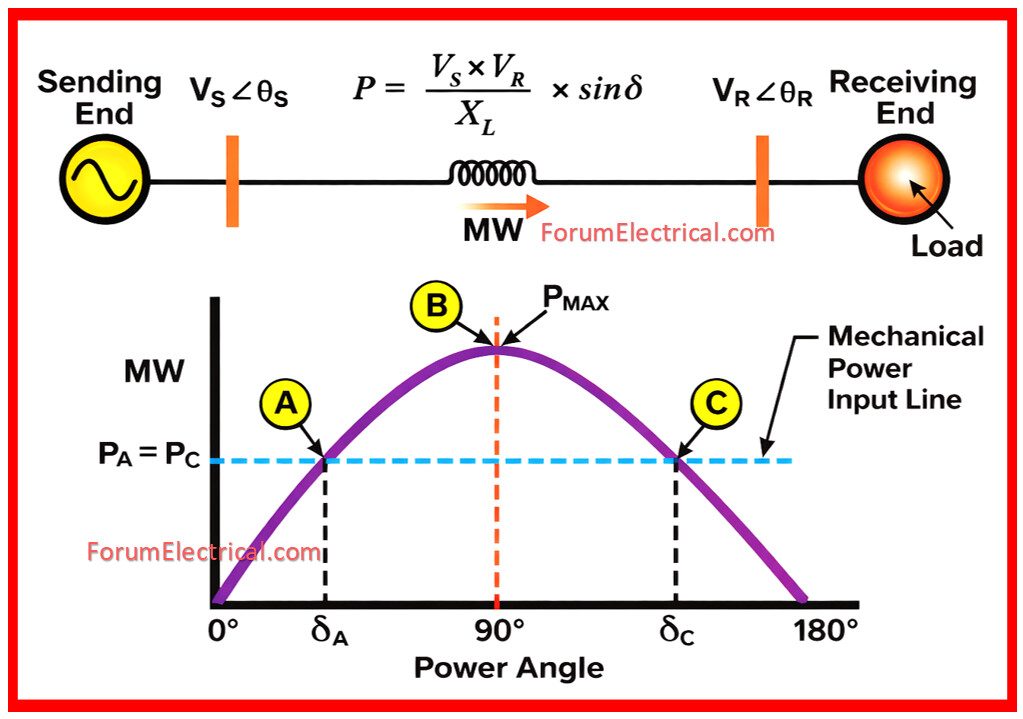
What is the formula for PF angle?
δ = cos-1(P/Vs x Vr)
Where
δ - Power Angle
P - Real Power Flowing
Vs - Magnitude of Sending-End Voltage
Vr - Magnitude of Receiving-End Voltage.
You can also follow us on AutomationForum.co, Facebook and Linkedin to receive daily Instrumentation updates.
You can also follow us on ForumElectrical.com , Facebook and Linkedin to receive daily Electrical updates.