A Disconnecting Circuit Breaker (DCB) is an advanced electrical device that combines the functions of
-
Traditional circuit breaker (CB) and
-
Disconnector (DS).
Unlike traditional substations where the breaker & isolator are separate components a DCB removes the requirement for a separate isolator by providing visible isolation as well as secure disconnection within the breaker.
Why was DCB created?
Traditional substations use:
Circuit breakers (CB) - interrupt fault currents.
Disconnect switches or isolators are used to give apparent and no-load isolation during repair.
This requires:
Extra space
Additional structures and foundations
Additional wiring and interlocking
Increased maintenance and inspection effort.
A DCB replaces these separate isolators & performs both functions separately.
How does a DCB Work?
A disconnecting circuit breaker integrates
Interruption capability (similar to a conventional breaker)
Isolation capability (similar to an isolator/disconnector)
The breaker’s interrupter chamber provides isolation. When the breaker is open, it provides a safe and quantifiable isolating gap that fulfills the insulating requirements.
Some DCBs have:
Visible mechanical position indicators.
Voltage-detecting systems (VDS) for safe verification of de-energization
Key Features:
Combines CB and Isolator in one device
Fewer mechanical components
Gas-insulated or hybrid designs
Reduced complexity leads to higher reliability.
Fast operation & simplified interlocking.
Advantages of using DCB
- With no isolators, there are fewer components and a smaller bay architecture, making it perfect for tiny GIS/AIS hybrid substations.
- Having fewer mechanical isolators reduces the risk of mechanical failure.
- Breakers and isolators typically require separate maintenance. DCBs significantly simplify operation.
- The integrated visual disconnection location and voltage sensing mechanism minimize human error throughout maintenance.
- Fewer components imply less wiring, testing & interlocking.
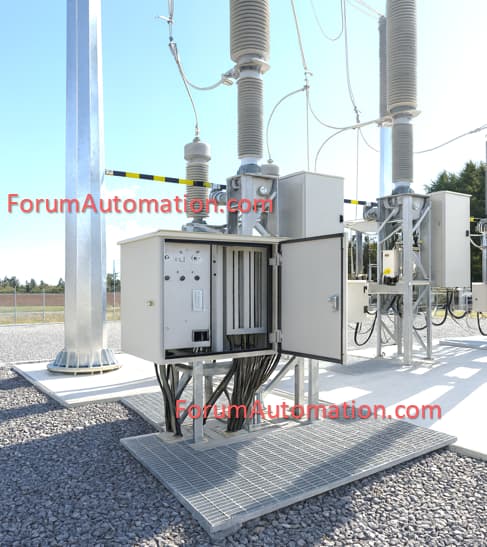
Applications of DCB
DCBs are widely utilized in:
High voltage substations (132, 220, 400, and 765 kV)
Space-constrained installations
Power utilities prioritize reliability and less maintenance.
A Disconnecting Circuit Breaker (DCB) is a modern switchgear equipment that combines a circuit breaker and a disconnector into a single unit. It enhances safety, decreases space needs, lowers maintenance costs and boosts dependability in high-voltage substations.
You can also follow us on AutomationForum.co, Facebook and Linkedin to receive daily Instrumentation updates.
You can also follow us on ForumElectrical.com , Facebook and Linkedin to receive daily Electrical updates.