What is a Bus Coupler?
In a double busbar substation, incoming and outgoing bays can be connected to either Bus 1 or Bus 2. This arrangement provides greater flexibility during maintenance, load transfer, and system reconfiguration.
A bus coupler is typically made up of a circuit breaker and associated disconnectors. It allows two busbars to be temporarily electrically connected, making it possible to transfer a bay from one bus to another without interrupting its supply.
How does Bay Transfer Work?
Suppose an outgoing bay is connected to Bus 2 and needs to be transferred to Bus 1. The bus coupler is first prepared by closing the required disconnectors and then closing its circuit breaker. This electrically couples Bus 1 and Bus 2.
The bay disconnector connected to Bus 1 can then be closed, followed by opening the disconnector connected to Bus 2. The bay is now transferred from Bus 2 to Bus 1 while maintaining continuity of supply.
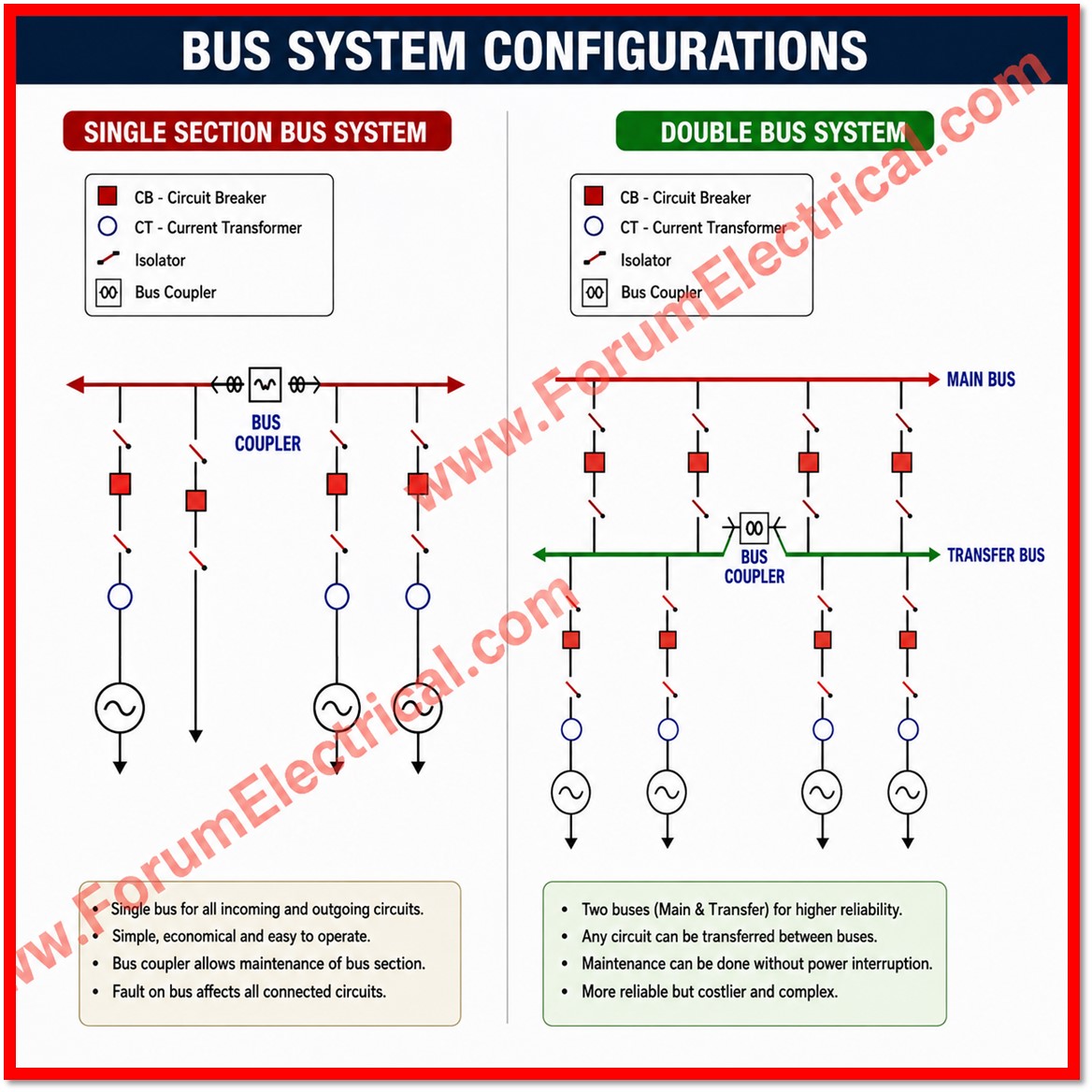
Finally, the bus coupler circuit breaker and its disconnectors can be opened to separate the two busbars again, subject to the approved switching procedure and interlocks.
Why is a Bus Coupler Important?
A bus coupler provides operational flexibility for busbar maintenance, load transfer, busbar switching, and system reconfiguration. It helps maintain supply continuity while changing the busbar connection of a bay.