When a 3-Phase 3 HP Motor is operated on a Single Phase the following factors can occur:
Loss of Rotating Magnetic Field
A three-phase motor uses 3 phase-shifted currents to generate a smooth spinning magnetic field.
When one phase is lost the revolving field transforms into a pulsing one.
As an outcome, the motor loses its capacity to generate typical starting torque and is unable to start turning by itself.
Motor Fails to Start
In most conditions, the motor cannot start in single-phase mode unless some external force (such as belt-driven load momentum) assists it in rotating.
Even if it starts, the torque is significantly reduced, resulting in unstable and wasteful operation.
Excessive Current in remaining 2 phases
When one phase fails, the motor draws a very high current (up to 2-3 times normal) in the other phases to compensate for loss of magnetic field.
This causes fast heating of the stator windings.
Overheating & Insulation Damage
Because of the high current & imbalance the motor quickly overheats.
If no protective mechanisms are fitted (overload relay, single-phasing protection, thermistor) continuous operation can burn the winding insulation resulting in irreversible damage or motor failure.
Speed Reduction & Vibration
Due to uneven magnetic forces, the motor operates at a low speed and with severe vibration.
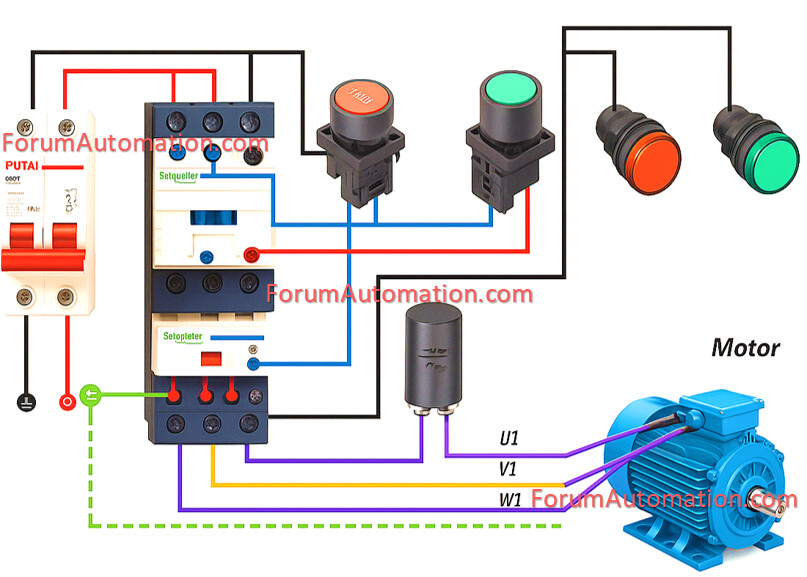
This mechanical stress can cause damage to bearings, couplings and other associated equipment.
Higher Power Consumption & Low Efficiency
Single-phasing dramatically reduces efficiency.
The motor consumes more power but provides significantly less output, making operation both dangerous and inefficient.
Protection Trip
If the system has a single-phasing relay, thermal overload relay (or) phase-failure protection the motor will normally trip instantly to prevent damage. Without these protections the motor is highly vulnerable.
You can also follow us on AutomationForum.co, Facebook and Linkedin to receive daily Instrumentation updates.
You can also follow us on ForumElectrical.com , Facebook and Linkedin to receive daily Electrical updates.