What causes false high vibration alarms in vibration transmitters after grounding or shielding changes?
What causes false high vibration alarms in vibration transmitters after grounding or shielding changes?
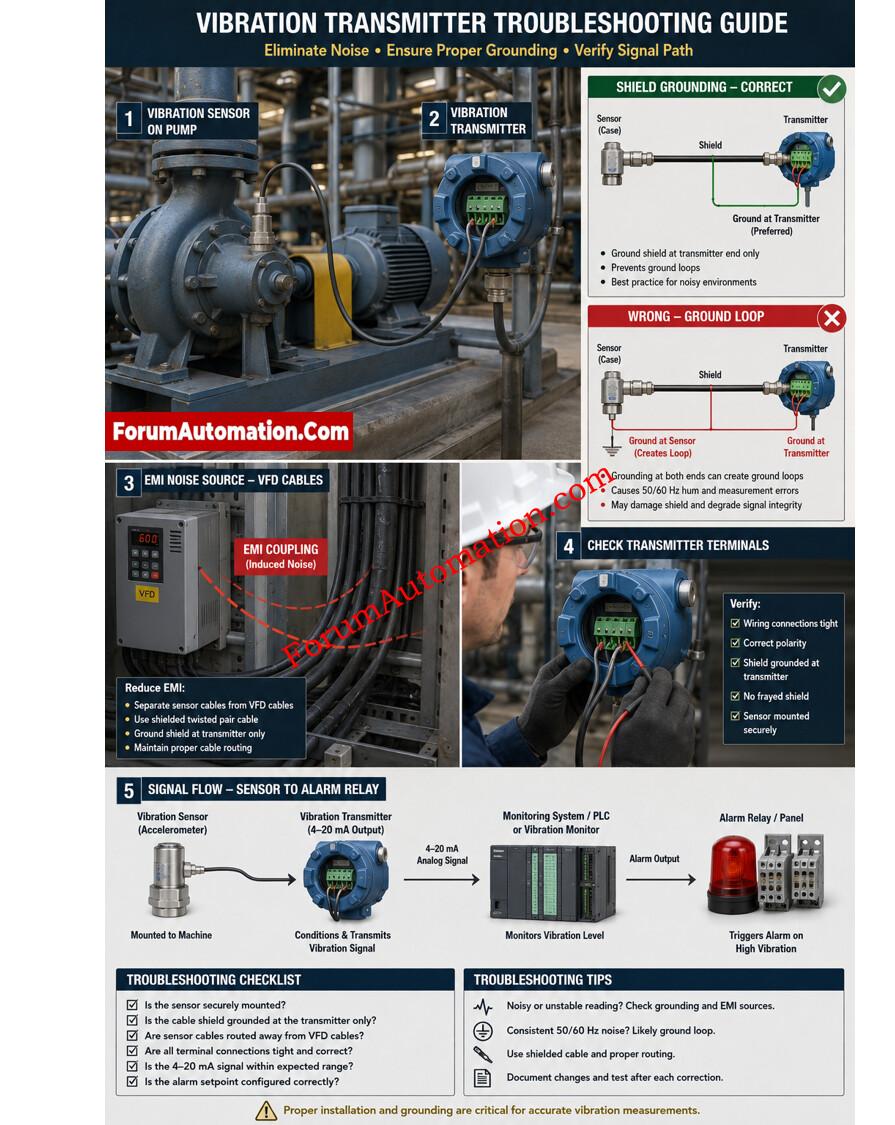
If you have false high vibration warnings following a change in grounding or shielding, it is normally because noise is getting into the transmitter circuit, not an actual mechanical fault. Vibration systems need a clean reference channel for the probe, extension cable and transmitter. If you move the shield, leave it floating, or ground it at either end, the loop can pick up EMI from motors, VFDs, welders, or nearby electrical wires. That interference can be regarded as a rapid surge in the vibration.
First out in the field. Compare wiring before and after change. Be sure to terminate the shield exactly as the equipment provider suggests. Check continuity of drain wire. Tighten terminal screws and ensure transmitter housing is properly bonded to ground. Check the junction box for moisture, loose glands or broken insulation: Also ensure that signal wire is routed away from high voltage conductors and switching equipment.
If the warning only appears after maintenance work, put back the original grounding arrangement and examine the signal. A consistent reading after a rollback is a good tip-off for a grounding or shielding problem. If the problem persists, check probe mounting, cable quality and transmitter filtering settings. Mechanical looseness, broken shielding, or improper earthing may give spurious peaks. In summary, false vibration alarm following grounding adjustments is most often caused by ground loops, generated noise or bad shield termination. The remedy is diligent cable practice, one-point grounding where needed, and careful distancing from sources of electrical noise. Always check transmitter zero and alarm thresholds after restoration before returning the machine to service.