What are the three types of PID tuning parameters?
What are the three types of PID tuning parameters?
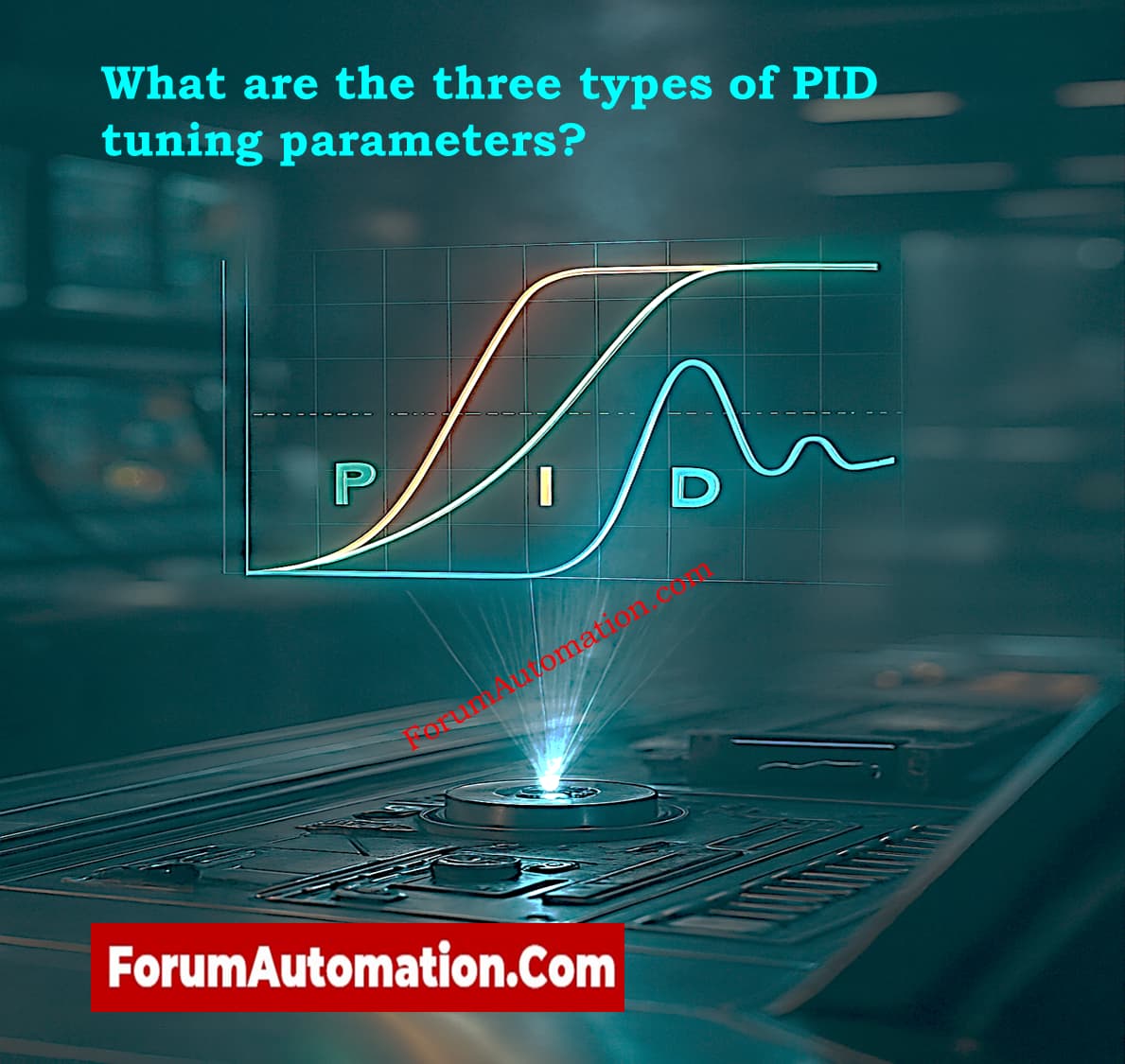
A PID (Proportional–Integral–Derivative) controller uses three tuning parameters—P, I, and D—to make sure that process control is stable and reliable. Technicians, instrumentation engineers, and control specialists who tune loops in real plants need to know what these three words mean.
Gain that is proportional (P):
The proportional term gives an immediate response based on the difference between the setpoint and the process variable. Increasing the P gain makes the controller more responsive, which means it reacts more strongly to changes. But if P is set too high, the loop can start to fluctuate or become unstable. The controller reacts slowly if it is too low. P takes care of the current error and sets the loop’s overall sensitivity.
Integral (I) Time / Gain:
The integral phrase adds up the errors over time to try to fix them. It gets rid of steady-state offset that P alone can’t get rid of. If you set the I parameter correctly, the procedure will finally reach the exact setpoint. If you do too much I action, it can generate slow oscillations, hunting, or integral windup, especially in processes that are slow. If I is too low, the procedure will never reach the desired value.
Derivative (D) Time / Gain:
The derivative term looks at how quickly the mistake is changing to see how it will change in the future. D helps cut down on overshoot, makes the response smoother, and adds damping to fast loops. It’s especially helpful for procedures that are disturbed quickly. Too much D, on the other hand, might make noise louder and make control action jerky. P, I, and D work together to develop a balanced control approach that keeps industrial process loops stable, accurate, and running at their best.