What are the most likely causes of intermittent HART communication failure on a live 4–20 mA loop?
What are the most likely causes of intermittent HART communication failure on a live 4-20 mA loop?
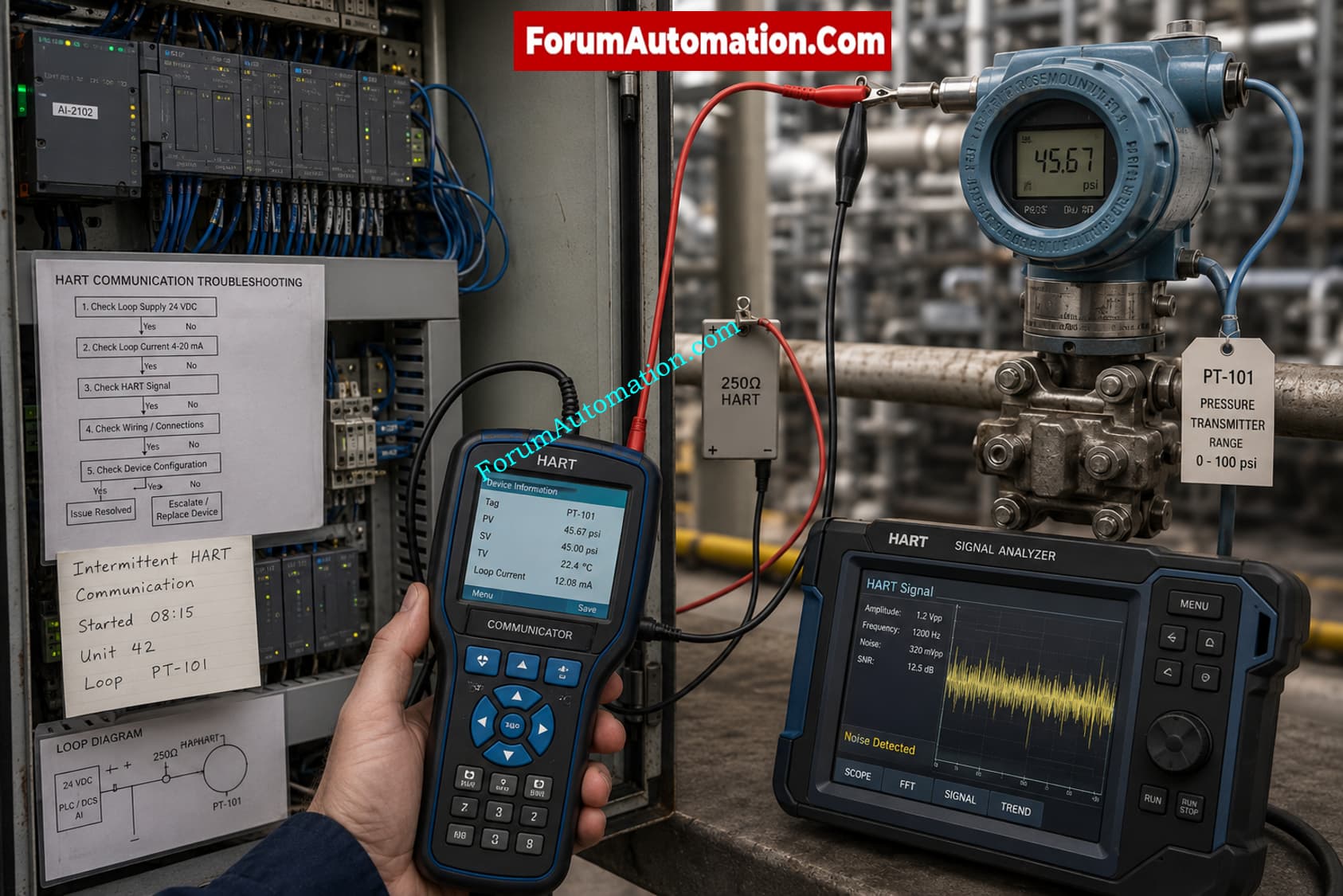
Intermittent HART communication on a live 4-20 mA loop is a common field issue. Troubleshooting includes checking the electrical loop and communication path as the analog signal can be working fine and the digital communication can be failing.
Most Common Causes
1. Insufficient Loop Resistance
A suitable loop impedance is required for HART communication which is generally a 250 ohm resistor. If the resistance is too low, the digital connection can be flaky even while the analog current is correct.
2. Loose or Corroded Wiring
Intermittent terminals, weak cable connections and corroded connections can interrupt the HART frequency signal before influencing the 4-20 mA measurement.
3. Electrical Noise and Grounding Issues
The HART signal can be affected by variable frequency drivers, insufficient shielding, ground loops and power supply ripple. Analog measurements seem normal but transmission constantly fails out.
4. Multiple HART Masters
When two devices attempt to be the primary HART master concurrently, communication conflicts might ensue.
5. Faulty Field Device or Communicator
Intermittent connectivity may be caused by a faulty transmitter, modem, multiplexer or handheld communicator.
Practical Troubleshooting Sequence
- Verify loop resistance
- Inspect all field terminations
- Check shield grounding practices
- Measure loop voltage
- Review power supply quality
- Test with another communicator
- Temporarily bypass multiplexers
Most intermittent HART communication failures in most operating plants are caused by wiring integrity, poor loop resistance and electrical noise.