What are the limitations of electromagnetic flow meter?
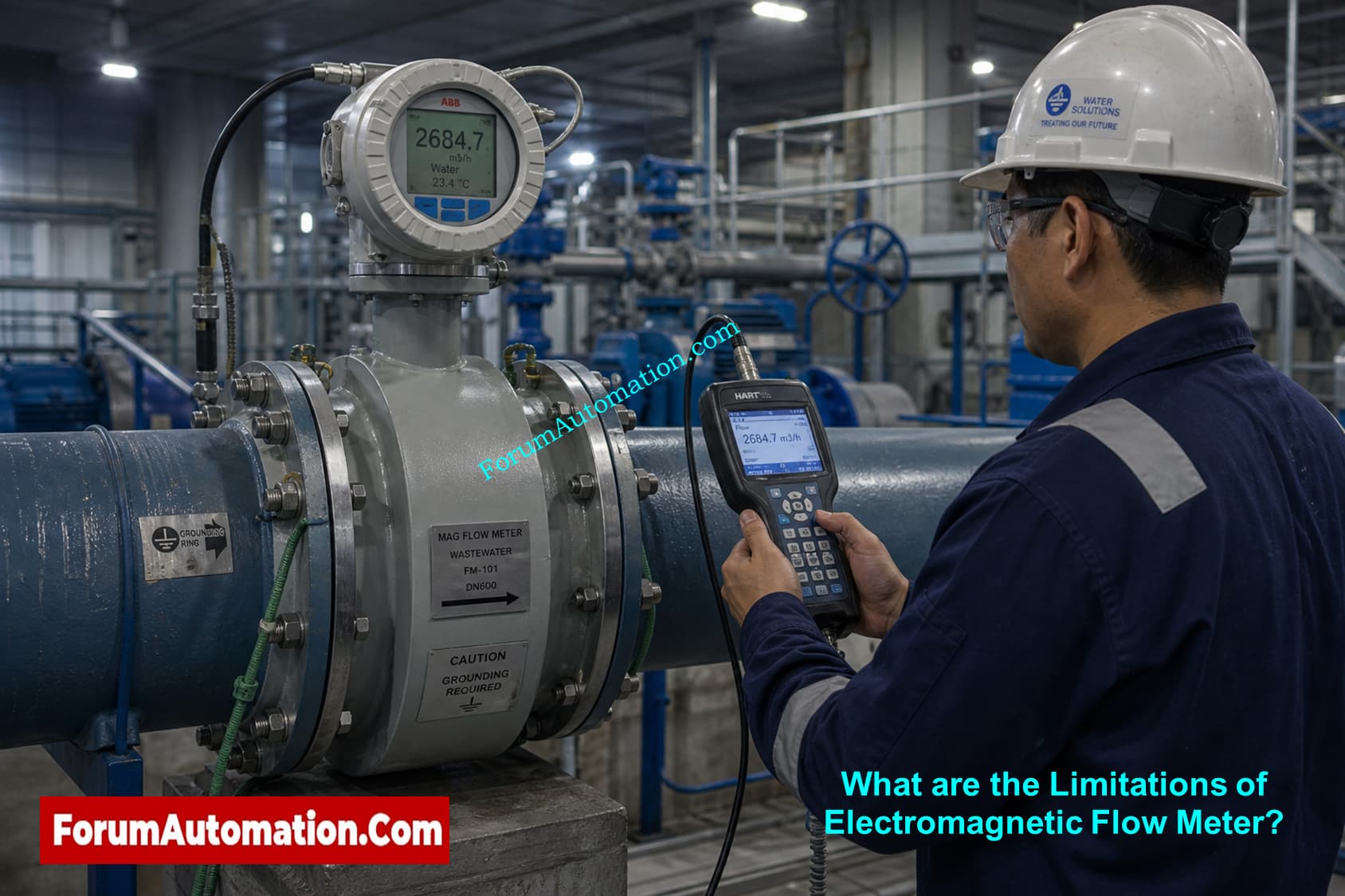
What are the Limitations of Electromagnetic Flow Meter?
Electromagnetic flow meters are used a lot in food processing, chemical plants, wastewater systems, mining activities, and water treatment plants because they can measure flow accurately without any moving parts. Instrumentation engineers need to know what their tools can and can’t do before they choose them for use in industry, though. The greatest problem is that it needs to be conductive. You can only use electromagnetic flow meters to measure liquids that conduct electricity. They can’t measure gases, hydrocarbons, steam, distilled water, or many organic solvents.
Installation dependency is another key constraint. For accurate readings, magnetic flow meters need pipelines that are totally full. Air pockets, pipes that aren’t completely full, or too much turbulence can cause readings to be wrong and measurements to be off. If you don’t ground something properly, it can also cause electrical noise and transmitter signals that change.
Some common field limits are:
- Can’t measure fluids that don’t conduct electricity
- Sensitive to difficulties with grounding
- Empty pipe conditions effect performance
- More expensive to install than mechanical meters
- Possible damage to the liner in abrasive services
- Air bubbles cause the signal to be unstable.
In wastewater treatment plants, air that gets trapped inside pipes can make flow indicators and totalizers give wrong readings. Choosing the wrong liner and electrode material in the chemical industry might lead to corrosion, coating accumulation, or sensor failure.
Even with these problems, electromagnetic flow meters are nonetheless quite dependable for measuring conductive liquids since they have low pressure drops, can measure in both directions, and don’t need much maintenance. Before choosing magnetic flow meters, engineers should always check the conductivity of the process, the conditions of the installation, the quality of the grounding, and the layout of the pipeline. In tough industrial settings, proper commissioning and maintenance can greatly improve long-term accuracy, operational reliability, and measurement performance.