What are the grades of control valve body material?
What are the grades of control valve body material?
Grades of control valve body material and advice on how to choose the right one for plant service
Material families and common grades
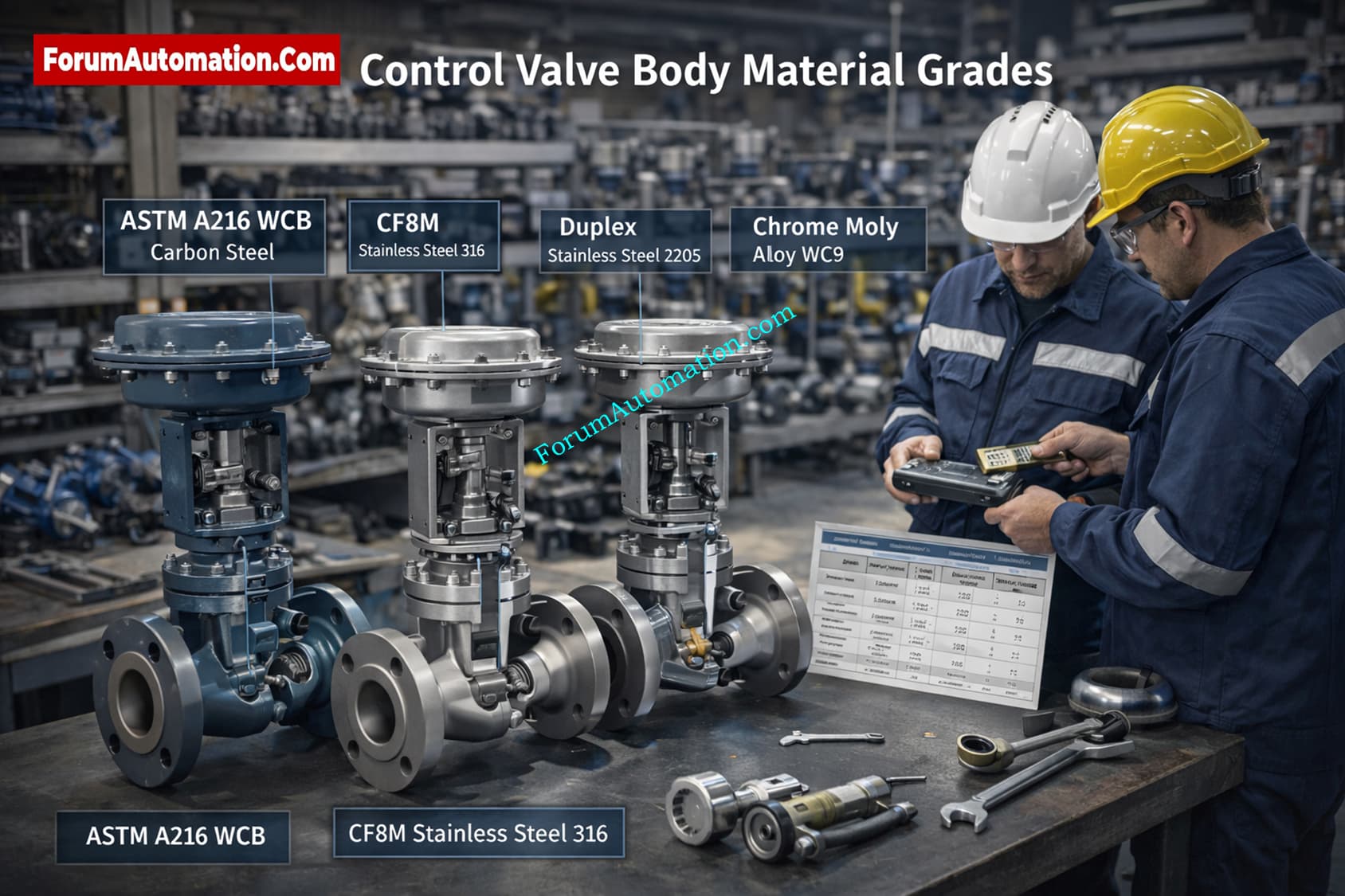
- ASTM A216 WCB and ASTM A105 are examples of carbon steel that can be cast or forged. They are good for general use in non-corrosive environments and at moderate temperatures.
- Low-temperature steels like ASTM A352 LCB and ASTM A350 LF2 are better for cryogenic applications since they are tougher.
- Chrome moly alloys like ASTM A217 WC6 WC9 and forged counterparts F11 F22 are good for high-temperature steam service.
- Austenitic stainless steels CF8 and CF8M are the same as 304 and 316 families and are resistant to corrosion in chemical and salty environments.
- Duplex and super duplex, like 2205, are better for seawater service because they are stronger and less likely to corrode.
- Nickel alloys like Monel, Hastelloy, and Inconel are good for harsh chemicals and high temperatures.
- For minor valves and drinking water systems, use cast iron or ductile iron for low-pressure, non-critical duty.
Practical selection notes
- Make sure that the pressure-temperature ratings and chemical compatibility match those of the process fluid.
- Choose between cast and forged based on how strong they are, how easy they are to inspect, and how long it will take to make them.
- Choose trim and body combinations that will help prevent erosion and cavitation.
- When hydrogen sulfide is present, you need NACE-compliant or sour service grades.
- Make sure the pipes are compatible to lower the danger of galvanic corrosion at joints.
- Before installation, ask for traceable heat numbers and mill test certificates.
During design reviews, get input from materials engineers and corrosion experts. Also, incorporate the inspection plan, maintenance intervals, and replacement criteria in the service requirements depending on what the plant has learned.