What are the Essential Protection Settings of an Air Circuit Breaker (ACB)?
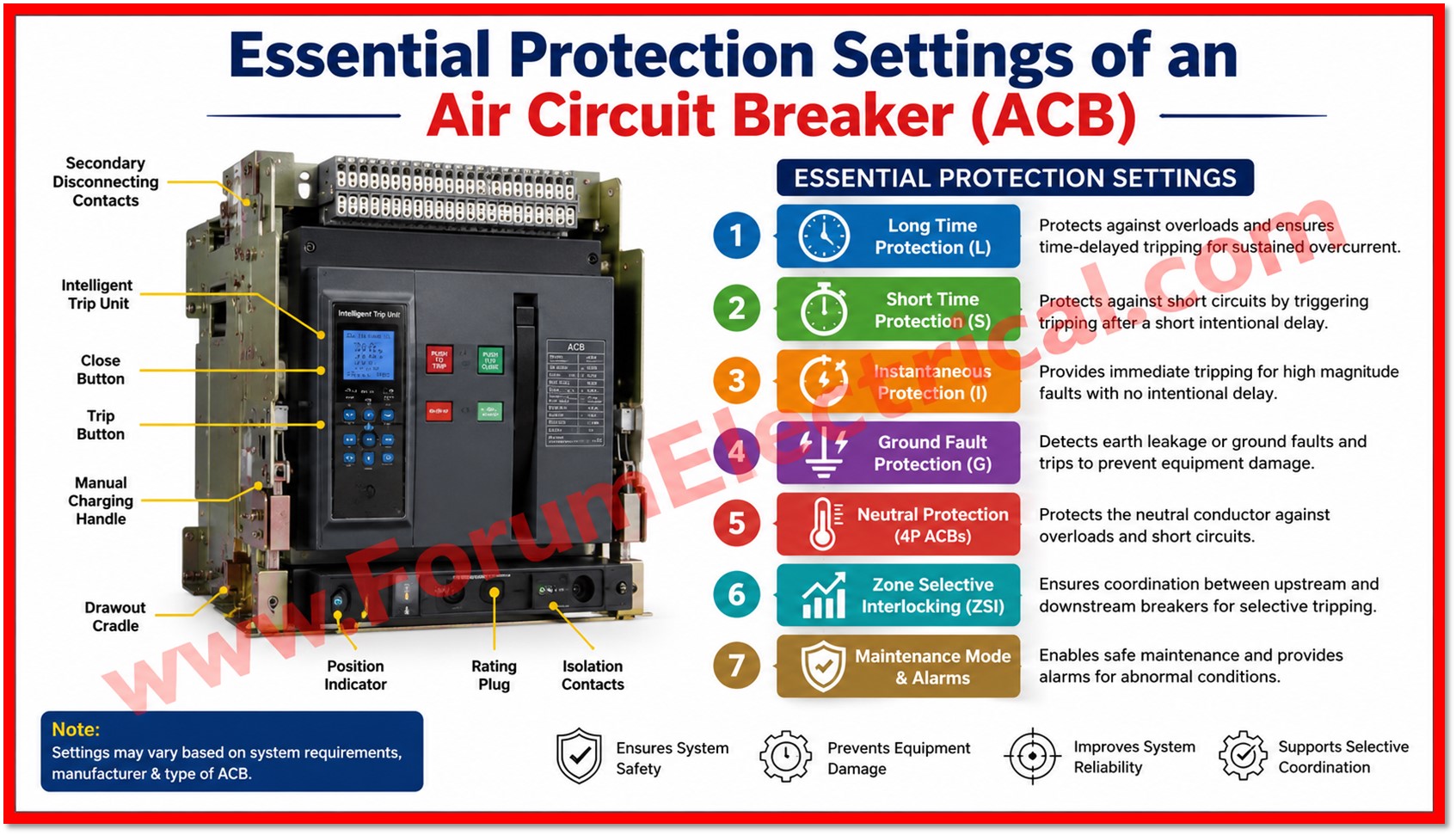
Reference Image Provided by the Respondent
Reference Image Provided by the Respondent
Air Circuit Breakers (ACBs) are widely used in low-voltage (LV) power distribution systems to protect electrical equipment from
Proper protection settings ensure reliable operation, minimize equipment damage and improve system safety.
Long-time protection (L) protects against sustained overload currents by allowing temporary overloads while preventing overheating of cables & equipment.
Short-time protection (S) provides delayed protection for high fault currents allowing downstream breakers to clear faults first for better selectivity & coordination.
Instantaneous protection (I) trips the breaker immediately when a severe short circuit occurs reducing damage to electrical equipment & limiting fault energy.
Ground fault protection (G) detects leakage current flowing to earth & trips the breaker to prevent electrical fires, equipment damage and shock hazards.
Adjustable time delays help coordinate multiple protective devices ensuring that only the breaker closest to the fault operates.
Current pickup settings defines the current level at which each protection function starts to operate based on the system load & equipment ratings.
Correctly configuring ACB protection settings that improves electrical system reliability, enhances personnel safety and ensures effective coordination between protective devices reducing unnecessary power interruptions.
What does an air circuit breaker protect against?