What are the common causes of control valve failure?
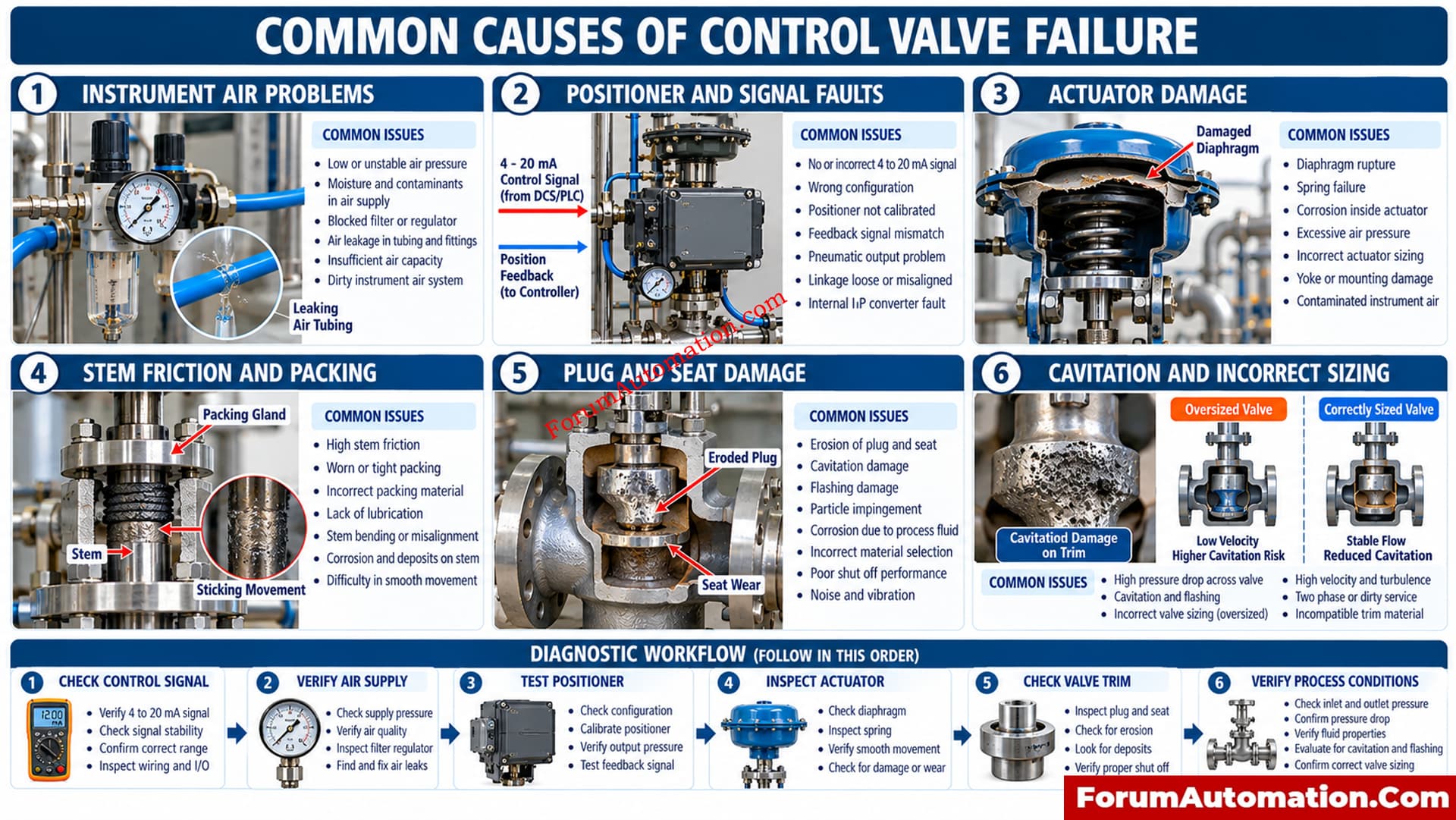
What are the common causes of control valve failure?
Control valve failure may appear as no movement, slow response, unstable control, incorrect travel, external leakage, or continued flow after a closing command. A systematic check helps avoid unnecessary replacement of the positioner or valve assembly.
Common causes
- Instrument air problems: low pressure, moisture, blocked filters, leaking tubing, or restricted exhaust can prevent proper stroking.
- Positioner or signal faults: incorrect 4 to 20 mA input, I/P failure, calibration errors, damaged feedback linkage, loose wiring, or incorrect action settings can cause wrong travel.
- Actuator damage – A torn diaphragm, leaking piston seals, a weak spring, a faulty solenoid, or not enough push can restrict movement.
- Stem and packing friction: Over tightened packing, corrosion, scoring, deposits or misalignment will cause stiction and jerky movement.
- Trim damage: debris, erosion, corrosion, cavitation, flashing, or worn plug and seat surfaces can cause leakage, noise, vibration, and poor control.
- Incorrect sizing: an oversized valve may hunt at low openings; an undersized valve may remain nearly fully open and fail to meet demand.
Practical troubleshooting sequence
Compare controller output with the positioner input. Check air pressure, tubing, alarms, and positioner output. Compare indicated travel with actual stem or shaft movement, safely. If movement is right but flow is improper, check trim condition, differential pressure and size.
Get permits, shut off power and depressurize before disassembly. Document findings with plant operating conditions. Compare positioner diagnostics to past maintenance records to identify re-occurring defects before the next shutdown. After repair check entire travel, fail action, leakage performance and control response before returning the valve to service.