What are the 4 stages of process automation?
What are the 4 stages of process automation
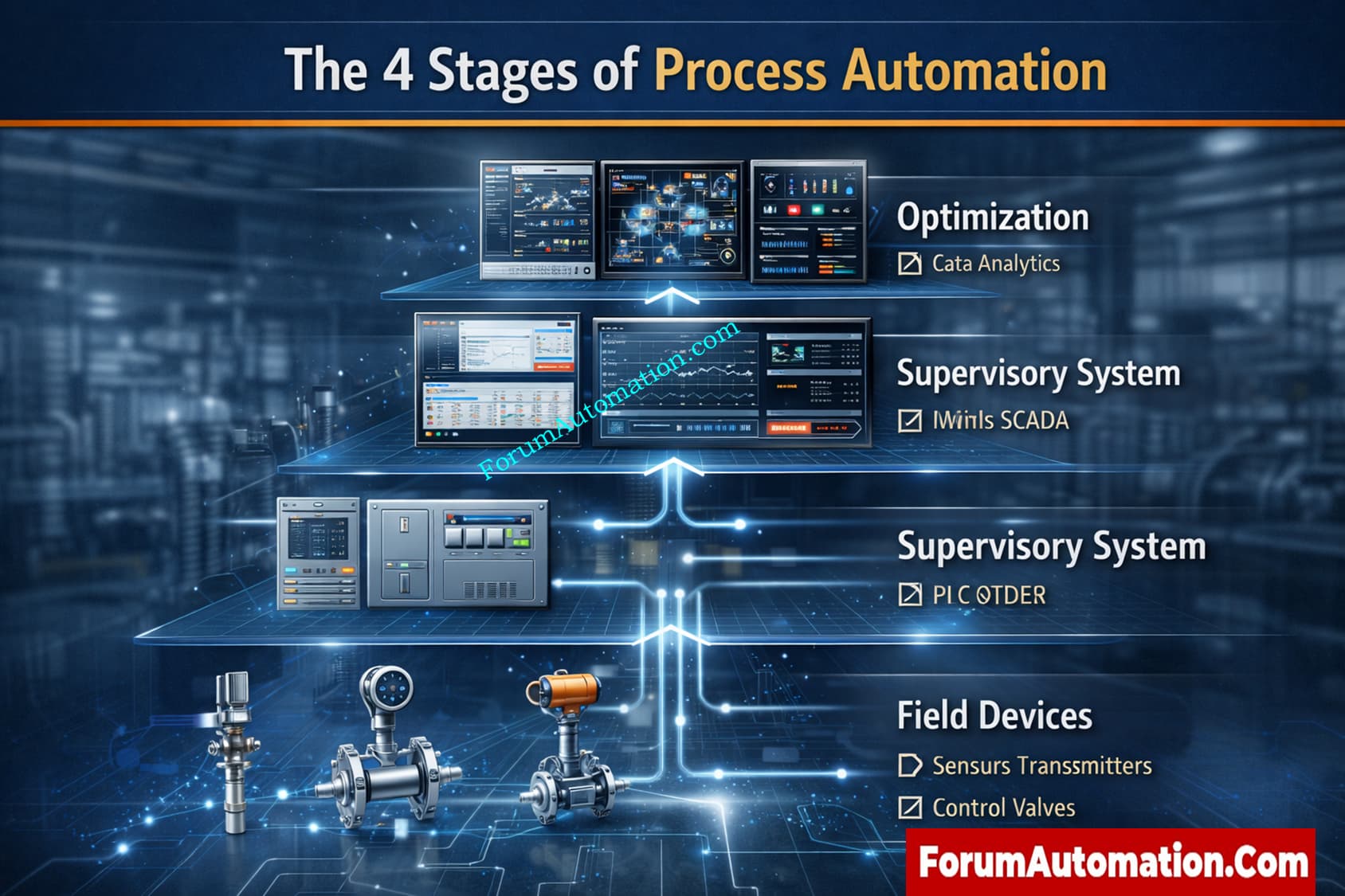
There are four main phases in the evolution of process automation in factories. Each level adds more control, efficiency, and intelligence.
Stage 1 Field Level
This includes things like transmitters, control valves, and switches that are sensors and actuators. These devices give real-time information and measure things like pressure, flow, and temperature in the process.
Stage 2 Control Level
At this point, controllers like PLCs or DCSs run control logic. PID loops control process variables by using data from field instrumentation.
Stage 3 Supervisory Level
SCADA and HMI are examples of systems that let you monitor, see data, set off alarms, and control operators. Engineers utilize this level to find problems and keep track of how things are going.
Stage 4 Optimization Level
This is the advanced layer that includes APC and systems for real-time optimization. It employs models and data analysis to make production more efficient, consume less energy, and make better products.
Practical Example
In a distillation column in a refinery:
- The field level monitors flow and temperature.
- The control level keeps the setpoints.
- Supervisory level shows alarms and trends
- The optimization level makes the most of yield and uses the least amount of energy.
Why It Matters
- Makes the process more stable
- Increases safety and dependability
- Lets you make decisions based on data
- Lowers the cost of doing business
Engineers can build, fix, and upgrade automation systems better when they know these four processes. This leads to greater plant performance and long-term operational excellence.