What are Gas Groups IIA, IIB, and IIC in Instrumentation Selection for Hazardous Areas?
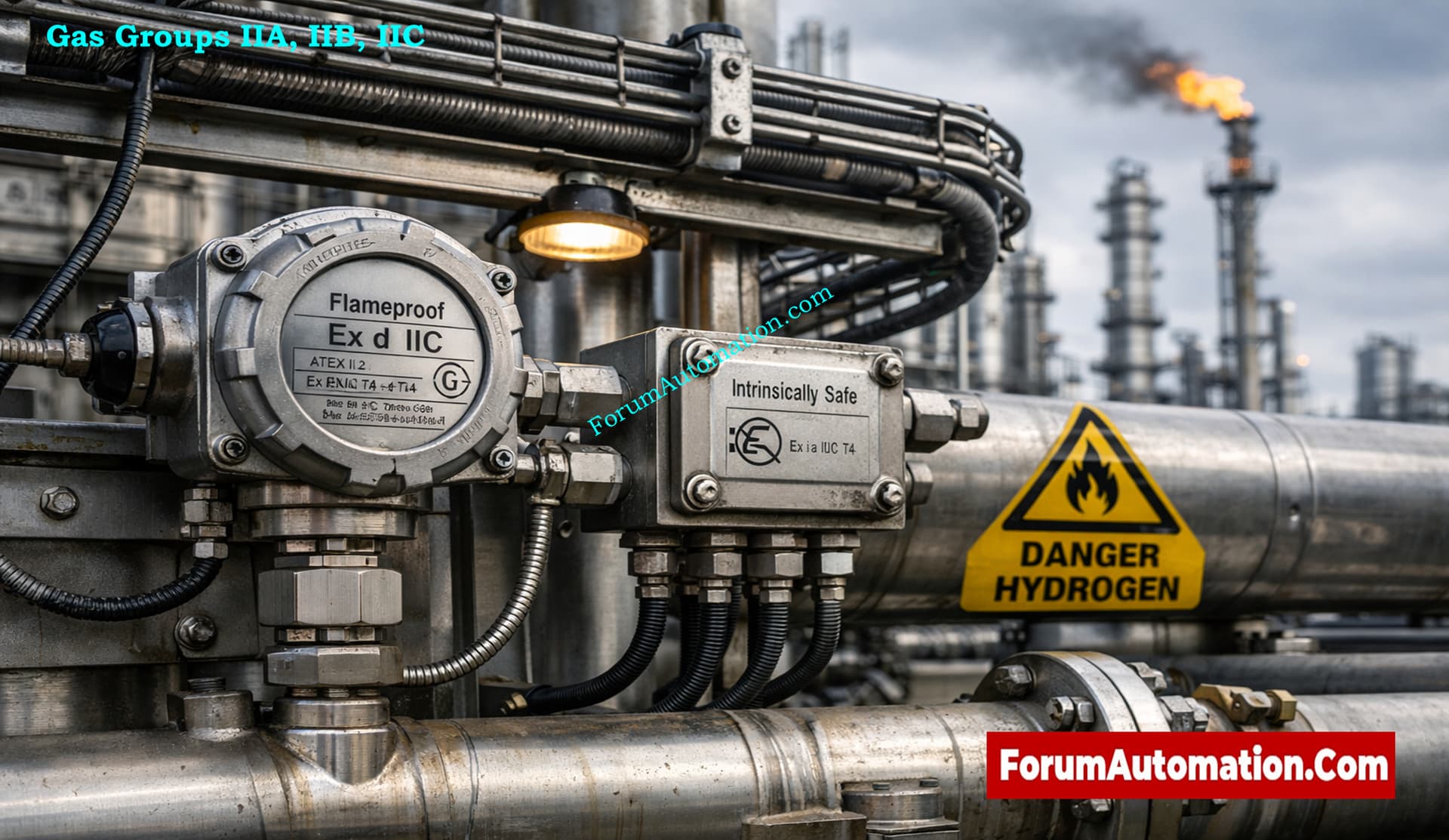
What are Gas Groups IIA, IIB, and IIC in Instrumentation Selection for Hazardous Areas?
Gas groups (IIA/IIB/IIC) break down Group II hazardous atmospheres into smaller groups based on how easy it is to start a fire and how quickly it spreads. IIA needs more energy to start (like propane), IIB needs less energy (like ethylene), and IIC needs the least energy (like hydrogen or acetylene). The equipment you choose must be the same as or better than the gas group at the site.
Plant implications
- Choose the type of enclosure and level of protection based on the gas group and zone categorization.
- IIC-rated devices work with IIB/IIA devices, however IIA devices do not work in IIC areas.
- When deciding where to put a sensor or transmitter, think about MIE, MESG, and ignition temperature.
Selection & design tips
- If hydrogen or acetylene might be present, use IIC-certified transmitters, junction boxes, and barriers.
- If you have field equipment that work with mixed gases, you should either put them in the higher-risk group (IIC) or use purge systems to keep them separate.
- Check the certification marks (Ex d, Ex i, Ex p, ATEX/IECEx) and the range of temperatures in which the device may work.
Troubleshooting common site issues
- If you have to take your instrument on a lot of travels for hydrocarbon servicing, check the gas group against the device marking.
- When employing intrinsic safety barriers, make sure that the amount of energy used is appropriate for the gas group and the cable’s capacitance and inductance limits.
- Before downgrading equipment for refit projects, look at the loop designs and any leak sources again.
Standards and verification: Follow the IEC/EN 60079 series guidelines, look at the site-specific material safety data sheets (MSDS), and do gas group verification during HAZOP and classification surveys to keep track of your reasons and maintenance actions. Put decisions in the site classification file.