VLF (Very Low Frequency) Testing
VLF (Very Low Frequency) testing is a diagnostic technique used to assess the condition of insulation in electrical equipment such as
-
cables,
-
transformers and
Insulation Condition Assessment
VLF testing helps evaluate the condition of insulation, detecting potential issues before they become major problems.
Prevention of Electrical Failures
By identifying insulation weaknesses, VLF testing can help prevent electrical failures, reducing downtime and maintenance costs.
Extended Equipment Life
Regular VLF testing can help extend the life of electrical equipment by detecting and addressing insulation issues early.
Reduced Maintenance Costs
VLF testing can help reduce maintenance costs by identifying potential issues before they require costly repairs.
Improved System Reliability
By ensuring the integrity of electrical insulation, VLF testing can help improve overall system reliability.
Advantages of VLF Testing
-
VLF testing is a non-destructive technique, allowing for testing without damaging the equipment.
-
VLF testing provides accurate diagnosis of insulation condition.
-
VLF testing is a cost-effective way to assess insulation condition.
Applications of VLF Testing
Cable Testing
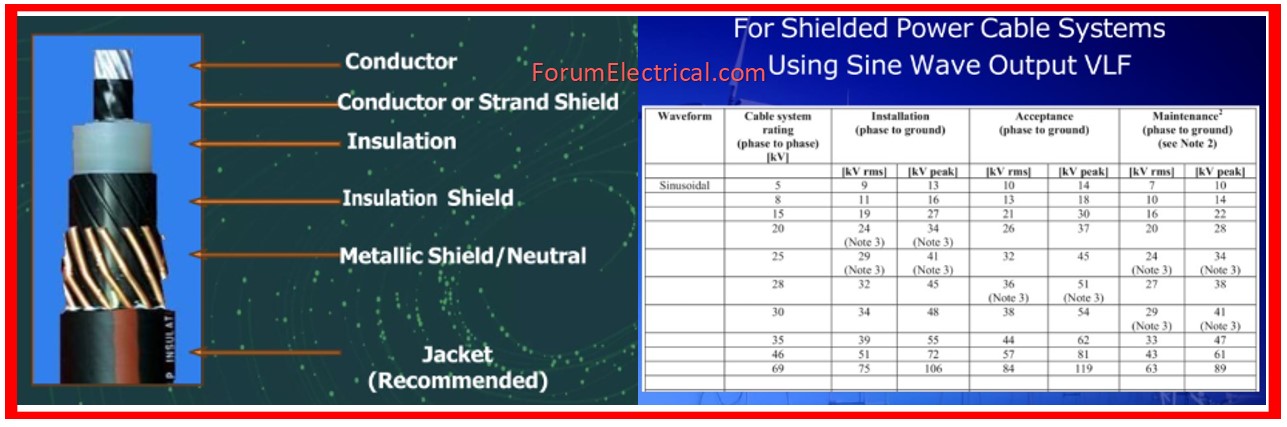
VLF testing is used to assess the condition of cable insulation.
Transformer Testing
VLF testing is used to evaluate the condition of transformer insulation.
Generator Testing
VLF testing is used to assess the condition of generator insulation.
Overall, VLF testing is an important diagnostic tool for assessing the condition of electrical insulation helping to
-
Prevent electrical failures,
-
Reduce maintenance costs and
-
Improve system reliability.