Transformer Turns Ratio (TTR) Testing
Transformer Turns Ratio (TTR) testing is an essential diagnostic test used to verify the turns ratio of power and distribution transformers. It compares the measured voltage ratio with the calculated ratio based on the transformer nameplate data to identify winding abnormalities.
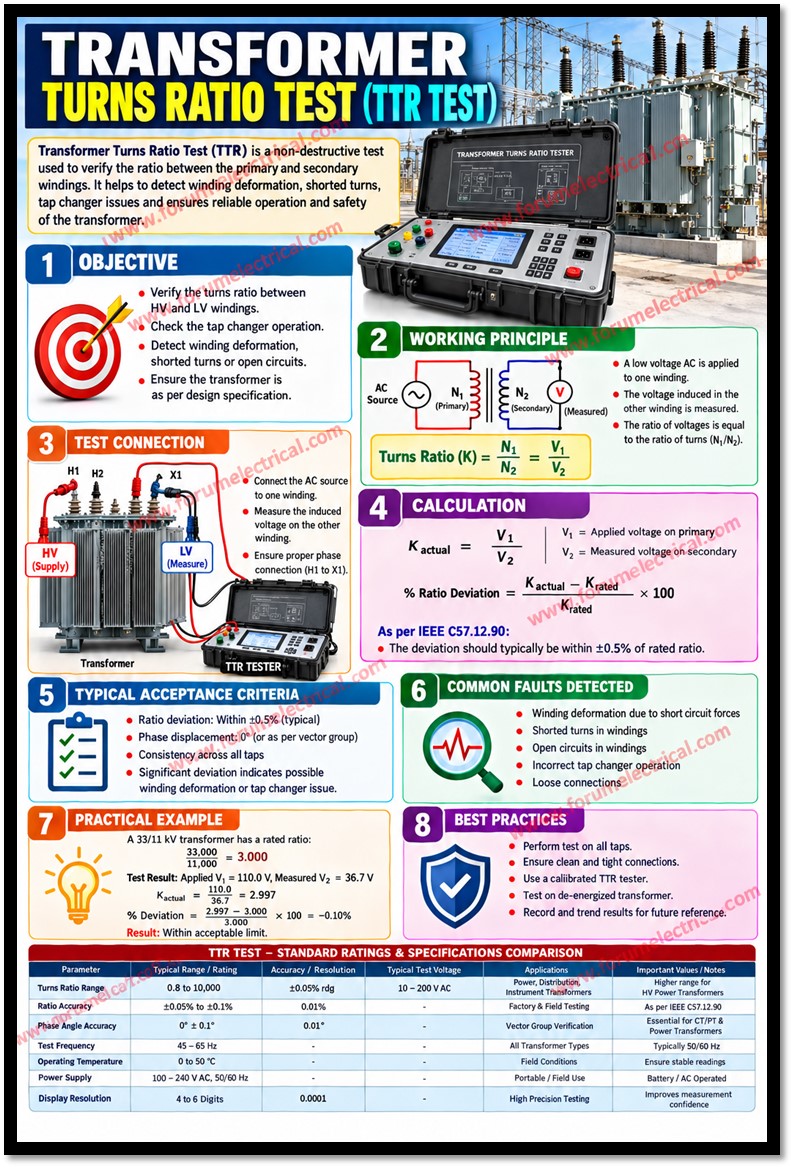
A deviation in the measured turns ratio may indicate:
-
Short-circuited turns or inter-turn insulation failure
-
Open-circuit winding conditions
-
Incorrect tap changer position or tap changer contact problems
-
Winding deformation or displacement following short-circuit faults or transportation
-
Incorrect winding connections, polarity issues, or manufacturing defects
TTR testing is performed during transformer factory acceptance, site commissioning, routine maintenance, and post-fault investigations. Measurements should be taken across the required phases and tap positions, with results evaluated against the manufacturer’s specifications and applicable standards.
Early detection of ratio deviations helps engineers identify winding defects, verify tap changer operation, and assess transformer condition before minor abnormalities develop into major failures.
Reliable transformer operation starts with accurate testing, proper interpretation of results, and condition-based maintenance.