Transformer Differential Protection
Differential Protection is one of the most important protection schemes used in high-voltage systems, particularly for power transformers and busbars in traction substations.
Based on the principle that the current entering a protected zone should equal the current leaving it (after CT ratio and vector compensation), any difference indicates an internal fault and initiates instantaneous tripping.
In practical applications, differential relays provide fast and selective protection against internal faults while remaining stable during load conditions and external faults.
Modern schemes employ percentage-biased characteristics, harmonic restraint to avoid maloperation during transformer energization, and vector group compensation for accurate operation.
In 132 kV substations and metro rail systems, differential protection is widely applied for transmission lines, busbars, and power transformers, supported by additional protection functions such as Restricted Earth Fault (REF), Buchholz relay, winding and oil temperature monitoring, pressure relief devices, and OLTC protection.
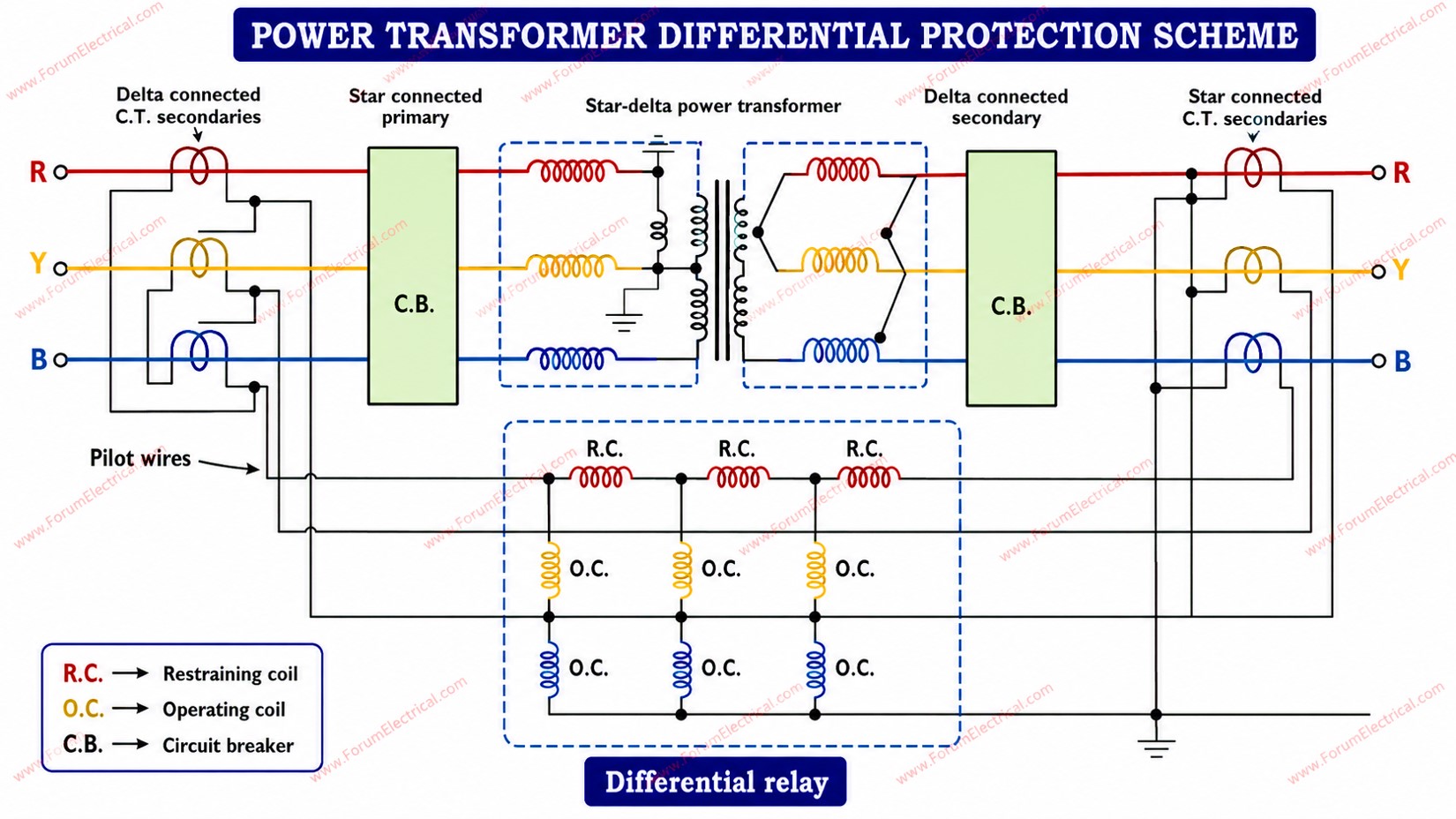
High-speed fault clearance helps protect expensive assets, minimize downtime, improve grid stability, and ensure reliable and uninterrupted train operations.