Substation Earth Pit Testing
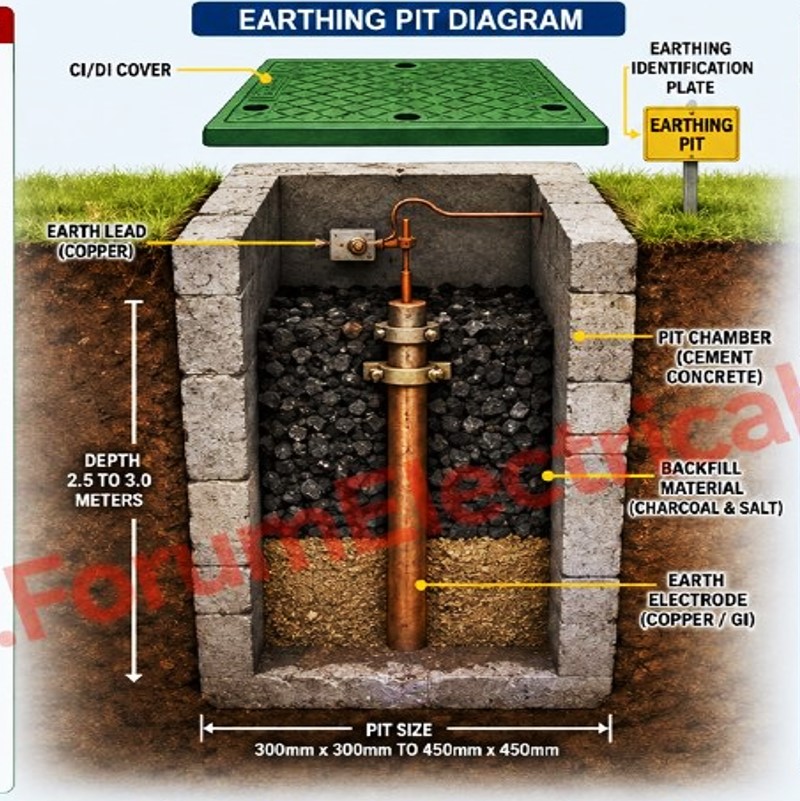
A reliable earthing system is one of the most important safety systems in an electrical substation. It provides a controlled path for fault current and helps protect personnel, transformers, switchgear and other electrical equipment.
Basic Earth Resistance Testing Procedure
1. Safety & Inspection
• Follow electrical safety and isolation procedures
• Inspect earth-pit connections, electrode and test links
• Verify the test instrument is calibrated
2. 3-Point / Fall-of-Potential Method
• Connect the earth electrode to E (Earth)
• Place the potential electrode P and current electrode C in suitable positions
• Inject test current and measure the voltage response
• The tester calculates the earth resistance
3. Verification & Documentation
• Take repeat readings to confirm stability
• Compare the result with applicable site/design requirements
• Record the final value in the earth-pit testing log
Earth resistance is not just a number on a test instrument—it is an important indicator of the effectiveness and integrity of the grounding system.
Safety First: Always follow the approved site procedure, equipment manufacturer’s instructions and applicable electrical standards while performing testing.