What is Shunt Fault?
Shunt faults in power systems cause very high fault currents and severe voltage disturbances, which may damage equipment and affect the stability of the system. Therefore, protection systems are used to detect faults quickly and isolate the faulty section from the rest of the power network.
Protection Against Shunt Faults
1. Circuit Breakers
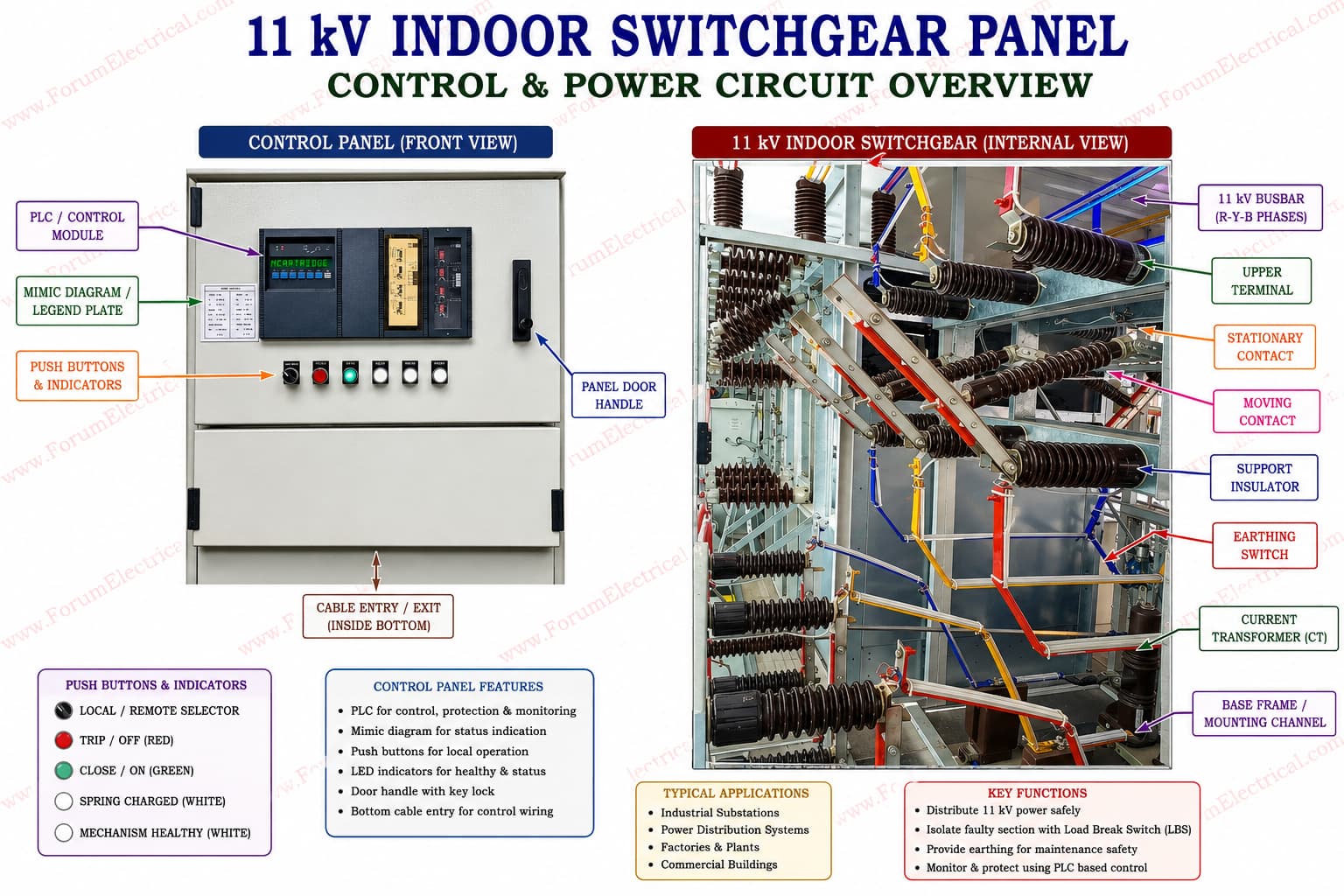
A Circuit Breaker (CB) is an electrical switching device used to interrupt the flow of current during abnormal conditions such as faults. When a fault occurs, the protective relay sends a trip signal to the circuit breaker, which opens its contacts and isolates the faulty part of the system to protect the equipment and maintain system stability.
2. Grounding Systems
Grounding (earthing) systems are used to provide a low-resistance path for fault current to flow into the earth. Proper grounding helps in limiting overvoltages, improving system protection, and ensuring safety of equipment and personnel during earth faults.
3. Protective Relays
Protective relays are devices used to detect abnormal conditions such as overcurrent, short circuits, or voltage disturbances. When the relay senses a fault, it sends a signal to the circuit breaker to disconnect the faulty section of the network quickly.
4. Distance Protection
Distance protection is widely used in transmission line protection. It operates based on the impedance measured between the relay location and the fault point. Since the impedance of a transmission line is proportional to its length, the relay can estimate the distance to the fault and trip the circuit breaker if the fault lies within its protection zone.