[color=#ff0000] Motor Starter Coordination [/color]
When it regards [url= How to Operate a Motor Directly Using a Latch Circuit?][color=#1E00A3] motor [/color][/url] [url= Exploring the Need for Starters in DC Motor Systems][color=#1E00A3] starters [/color][/url], choosing the appropriate coordination type is essential for both safety and efficiency.
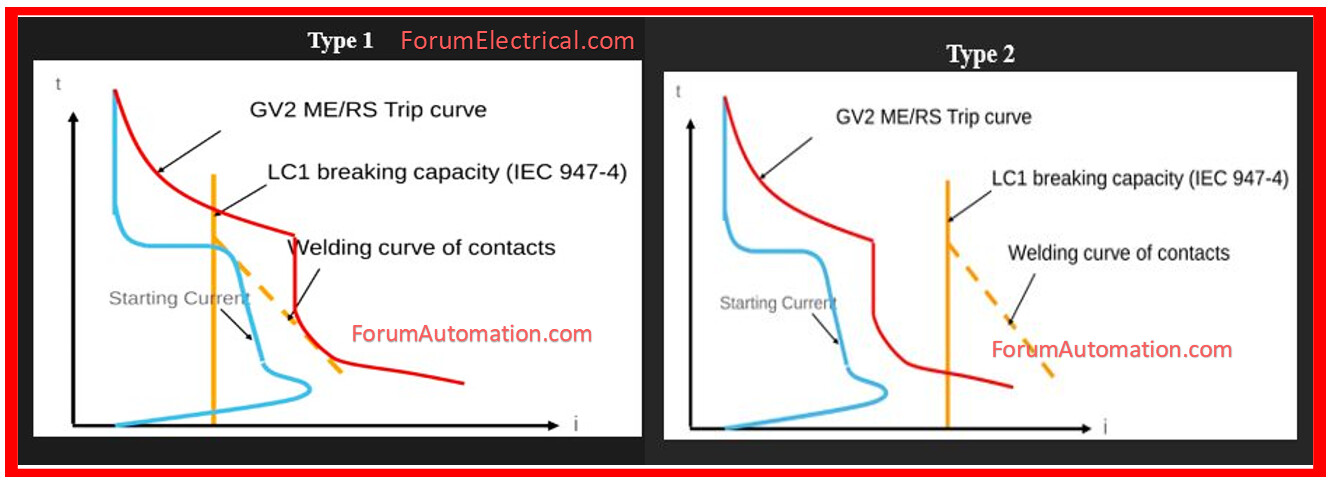
Here is a simple breakdown:
[color=#ff0000] Type 1 Coordination [/color]
Protects against short circuits, but may cause irreversible damage following a malfunction (e.g., melted contacts or wrecked overload relays).
Ideal for the low-risk environments, but may require downtime for repairs.
[color=#ff0000] Type 2 Coordination [/color]
Provides protection while remaining useful after a defect, generally requiring only modest modifications (e.g., separating tack-welded connections).
Recommended for important applications to reduce downtime and preserve service.
[color=#ff0000] Why It Matters? [/color]
Selecting between Type 1 & Type 2 can affect your operation’s safety and efficiency.
Type 2 protects individuals and installations, lowering costs and downtime.
Components Matter:
In order to achieve successful Type 2 coordination, make sure that the system includes certified components (such as [url= Circuit Breaker Timing Test Procedure][color=#1E00A3] circuit breakers [/color][/url] & thermal overloads) that fulfill IEC standards.
Choose wisely to improve operating dependability and safety.
You can also follow us on [color=#ff7700]AutomationForum.co[/color], [url= https://www.facebook.com/instrumentation.control][color=#1E00A3]Facebook[/color][/url] and [url= https://www.linkedin.com/showcase/81532759/feed/posts/][color=#1E00A3]Linkedin[/color][/url] to receive daily Instrumentation updates.
You can also follow us on [color=#ff7700] ForumElectrical.com [/color], [color=#1E00A3] Facebook [/color] and [color=#1E00A3] Linkedin[/color] to receive daily Electrical updates.