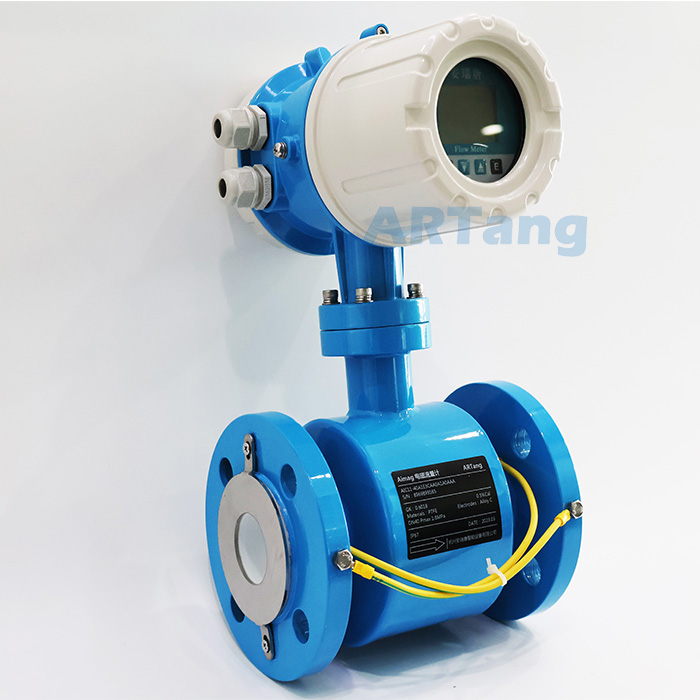
This is a typical problem with a mag flowmeter, and since power, diagnostics, pipe fullness, and conductivity are all fine, we are definitely past the “basic checks.”
The first item I check in the field is: Grounding or Earthing the Mag Flowmeter
If the measuring circuit doesn’t have a good reference ground, a magnetic flowmeter will display zero flow even if everything else is excellent.
Why grounding is the first step
An electromagnetic flowmeter measures flow by using a very small voltage that is created when a conductive fluid cuts through a magnetic field. This signal is in microvolts, which means that
Any missing or bad grounding
Floating pieces of pipe
Rings that aren’t grounded properly
Earth continuity is broken
will make the transmitter lose its reference and bring the signal down to zero, even though water is plainly flowing.
What I check on site in this order
Continuity of the grounding cable from the flowmeter body to the plant earth
Presence of grounding rings (particularly on lined pipes made of rubber, PTFE, or epoxy)
Jumpers that connect across insulating flanges
Corrosion or loose terminals on the grounding lug
Check the resistance to earth (it should be very low, usually less than 1 ohm).
This problem happens a lot in cooling water systems because: Pipes are commonly lined with rubber.
Temporary bypass spools interrupt the connection between the ground and the power source.
Teams that do maintenance take off bonding straps and forget to put them back on.
Why not start with the electrodes or the signal wiring?
Usually, noisy or unstable readings are caused by electrode coating, polarity reversal, or cable problems, not a clean, solid zero with good diagnostics. On the other side, a grounding problem makes a perfectly “healthy” transmitter show no flow.
If a mag flowmeter suddenly indicates 0% flow while the process is going on and all the tests are fine, check the grounding before doing anything further.
That’s where the problem is hiding nine times out of ten.