Is it okay to bypass a safety device?
Is it okay to bypass a safety device?
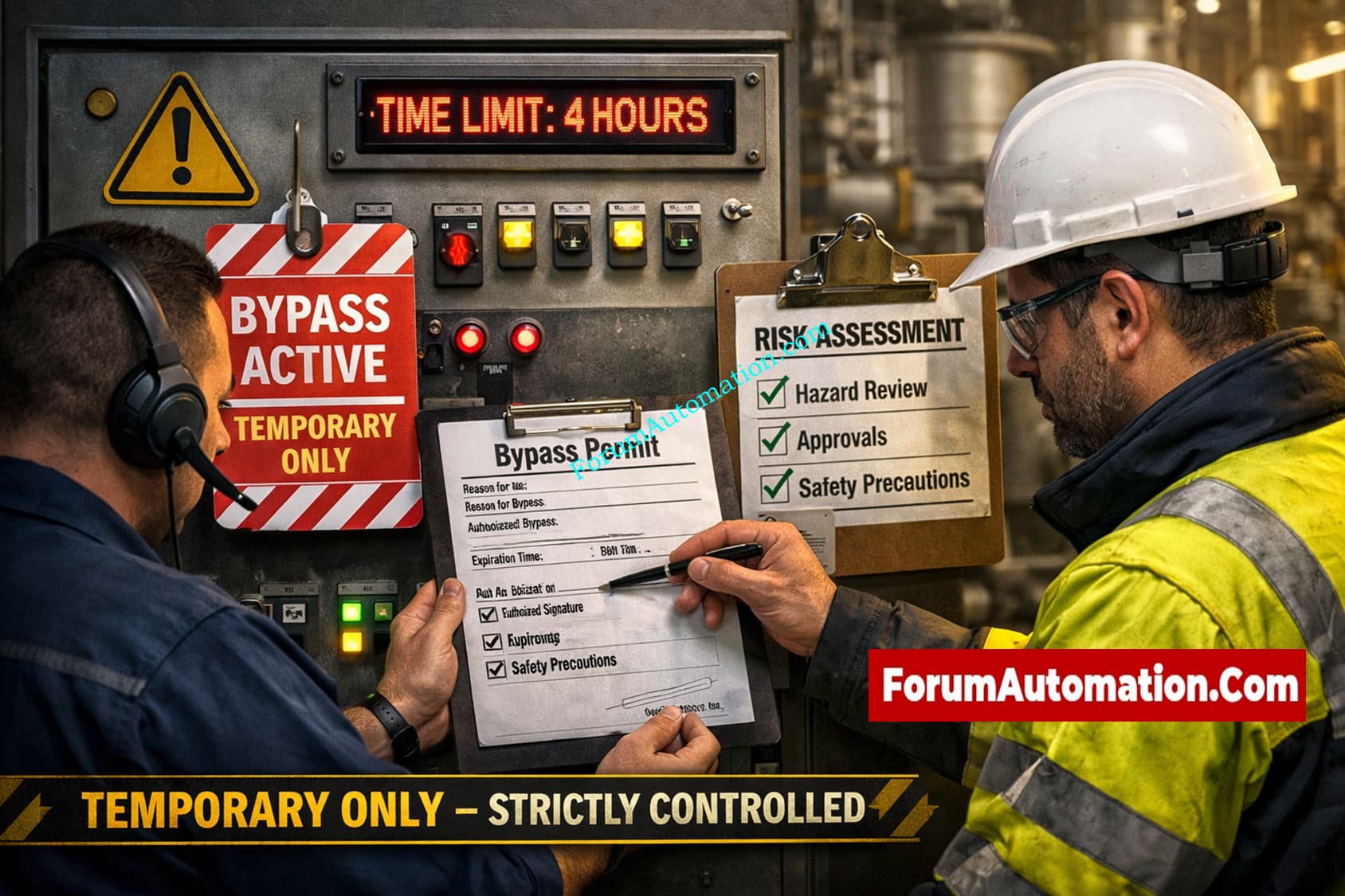
Bypassing a safety device in an industrial process is a very important choice that has a direct effect on the safety of the plant and the amount of danger it faces. Safety devices are meant to keep people safe by stopping dangerous events, equipment failures, and possible deaths. As a result, bypassing them should never be a normal thing to do and should always be done with strong procedural control.
When Bypass is Allowed
You can only bypass when certain criteria are met, as during maintenance, calibration, commissioning, or troubleshooting. Management of Change and a complete risk assessment must approve it. The length of the bypass should be explicitly stated, kept to a minimum, and watched to make sure the system isn’t left in a dangerous state for too long.
Field Best Practice
In real life, bad bypassing has caused serious accidents and damage to equipment. Always make sure that the control room clearly shows the bypass status and keeps track of it correctly. Don’t skip over more than one safety layer at a time, as this greatly raises the risk. After the necessary work is done, the safety device must be put back in place right away. A controlled, temporary, and well documented bypass is acceptable, but unsafe or unauthorized bypass practices must be strictly avoided.