How to use Cv to calculate flow?
How to use Cv to calculate flow?
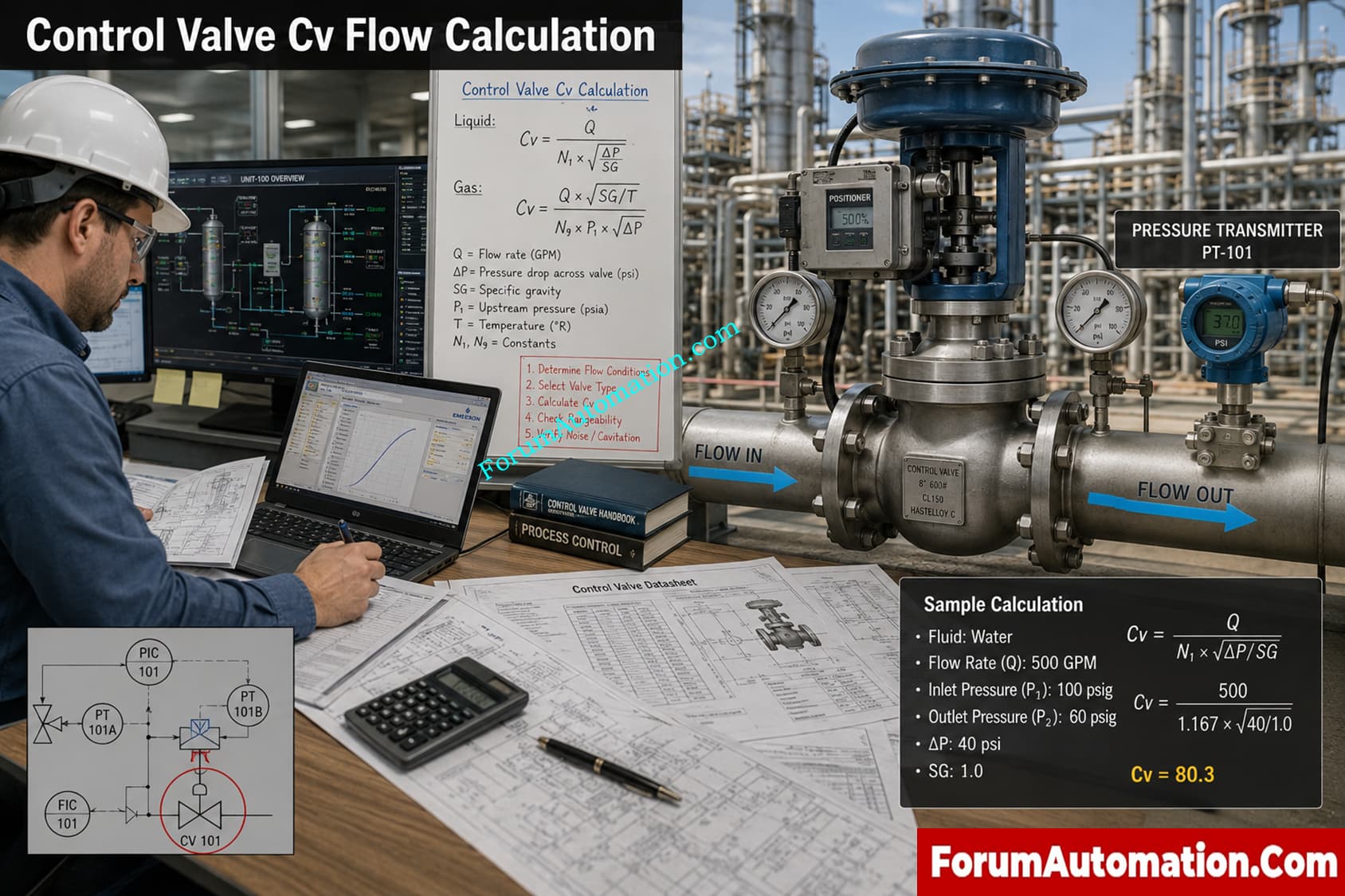
Cv is the valve flow coefficient and is used to determine the flow of liquid or gas through a control valve at a certain pressure drop. Cv calculation is very important for control valve sizing, flow analysis and process optimization in industrial automation field. Instrumentation engineers use Cv values during design, commissioning and troubleshooting of flow control systems .
Basic Cv Formula for Liquid Flow
For liquids the typical formula is:
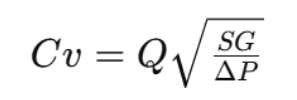
Where:
Cv = Valve flow coefficient Q = Flow rate in gallons per minute SG = Specific gravity of liquid ΔP = Pressure drop across valve in psi
Practical Example
Suppose a control valve handles water with a flow rate of 20 GPM and pressure drop of 4 psi.
Using the equation:
Cv = 20 × √(1 ÷ 4)
Cv = 20 × 0.5
Cv = 10
The required valve Cv is 10.
Importance in Industrial Plants
Proper Cv selection will prevent control valve hunting, cavitation, excessive pressure loss and unstable process control. Oversized valves will not control well at low flow levels while undersized valves will limit output capacity. EPC engineers typically employ Cv calculations for process design and creation of valve datasheets.
Field Engineering Considerations
- Check actual process pressure drop
- Check specific gravity of liquids carefully
- Consider future plant expansion allowance
- Assessing cavitation risk for high pressure service
- Valve characteristic and trim type confirmation
Accurate Cv calculation results in better control valve performance, process stability and energy economy for industrial flow control applications.