How to select control valve characteristics?
How to Select Control Valve Characteristics?
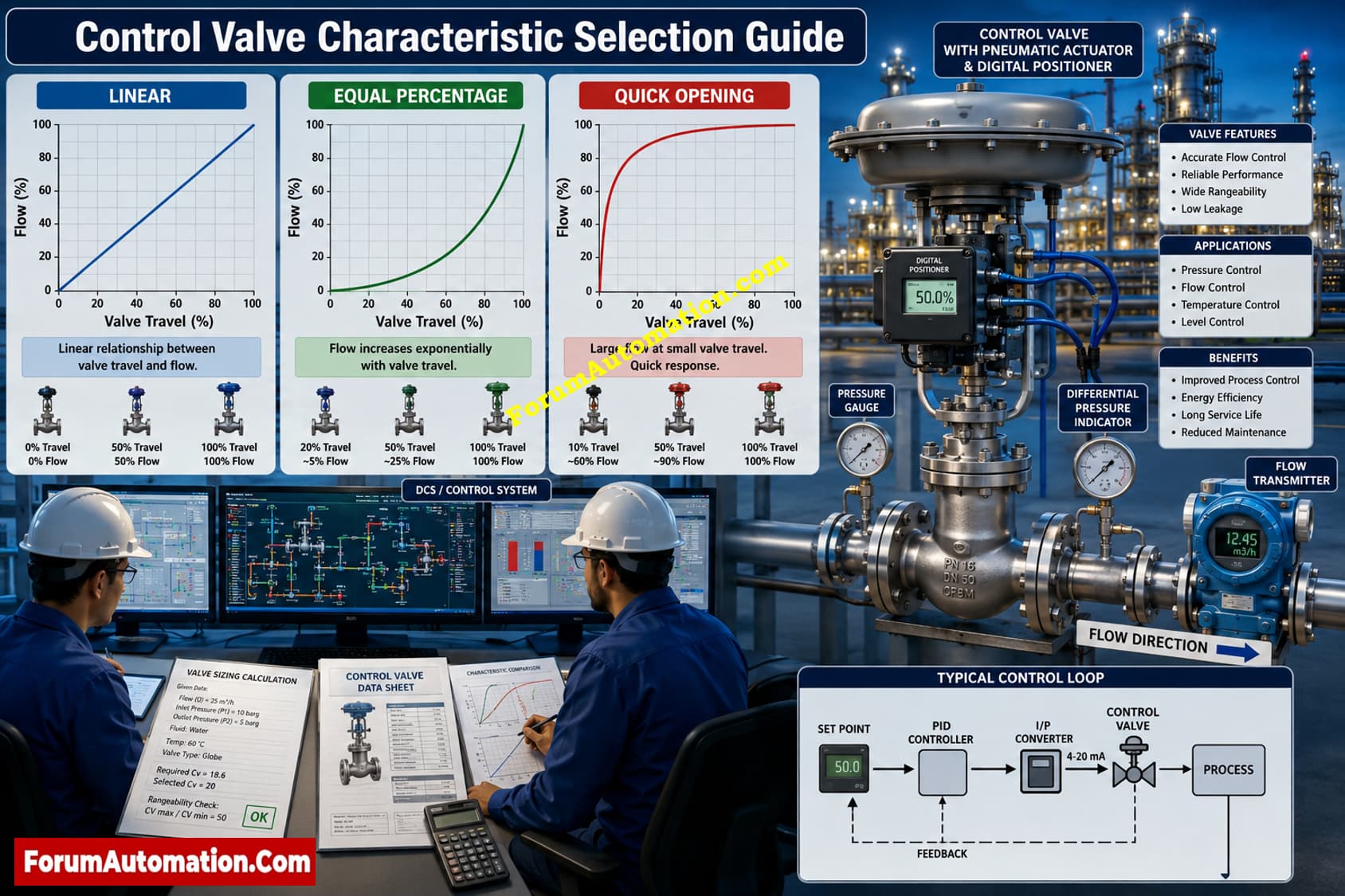
Choosing the right control valve characteristic is key to stable process control, energy efficiency and extended equipment life. The valve characteristic defines the change in flow with valve travel. Engineers should consider the process dynamics, the pressure drop, the system resistance and the control objectives before selecting the final valve trim. The wrong choice of the operating plant results in hunting, oscillation, excessive wear and poor quality of the product.
Selection Guidelines
- Linear Characteristic: Suitable when the pressure drop across the valve is almost constant.
- Equal Percentage Characteristic: For variable pressure drop systems in most process industries.
- Quick Opening Characteristic: Used for on/off service, emergency shutdown and relief applications rather than throttling.
Practical Plant Considerations
During the process of valve sizing and specification engineers should evaluate:
- Properties of process fluid
- Pressure and temperature of operation
- Turndown ratio and flow range
- Available pressure differential
- Control strategy
- Hazard of cavitation and flashing
- Limits on noise and vibration
For example chemical plants and refineries often employ equal percentage control valves since pipe losses vary with plant load. Water distribution system with generally steady pressure is often better to have linear features.
When it comes to valves, selecting the correct valve will guarantee precise control throughout the range of operation and save actuator travel and maintenance costs. Always check the installed characteristic and do not depend just on the inherent characteristic supplied by the manufacturer. Loop performance is assured by simulation during EPC design and validation during commissioning.
Correct selection of the control valve characteristic can increase process stability and product quality, reduce energy consumption and extend the valve service life, thus it is one of the most significant decisions in instrumentation engineering.
1 Like