How to Read an Inverter Data Sheet?
When selecting an inverter for an off-grid solar power system, don’t focus only on the rated power in watts. Understanding the electrical specifications is essential for choosing the right inverter, ensuring system efficiency, and improving equipment reliability.
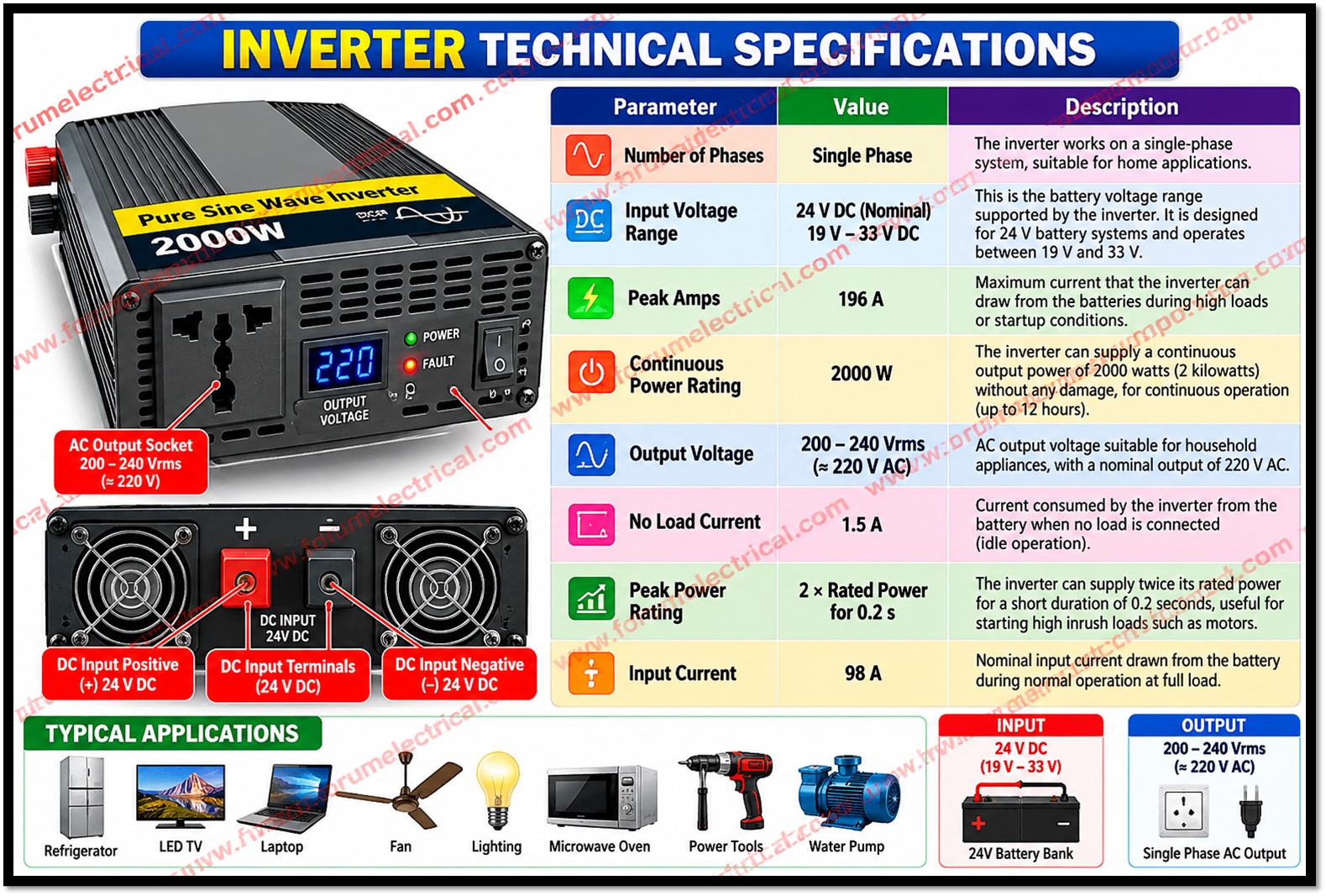
The values below are examples for explanation only. Actual specifications vary depending on the inverter model and manufacturer.
-
Number of Phases – Single Phase: Indicates that the inverter provides single-phase AC output, commonly used for residential and small commercial applications.
-
Input Voltage Range – 19 V to 33 V: Specifies the acceptable DC input voltage range. The inverter may shut down if the battery voltage exceeds the permitted limits.
-
Continuous Power Rating – 2,000 W: Indicates the maximum power the inverter can continuously supply under its specified operating conditions.
-
Output Voltage – 200–240 V AC: Defines the AC output voltage available to operate compatible electrical appliances.
-
Input Current – 98 A: Represents the DC current drawn from the battery under a particular operating condition. This value helps determine the appropriate cable size and protective devices.
-
Peak Current – 196 A: Indicates an example of the short-duration current capability required to handle demanding startup loads, subject to the inverter’s specifications.
-
Peak Power Rating – 2 × Rated Power: Indicates a surge capacity of twice the rated power for a limited period, helping the inverter start loads such as refrigerators and motors when supported by its surge rating.
-
No-Load Current – 1.5 A: Represents the current consumed by the inverter when switched on without supplying an external load. This affects battery autonomy and overall system efficiency.
Always check continuous power, surge capacity and duration, battery voltage compatibility, DC input current, standby consumption, and protection features before selecting an inverter.
Proper cable sizing and suitable overcurrent protection are also essential for a safe and reliable solar power system.