In every modern residential building a properly structured electrical distribution system ensures safety, reliability and efficient power delivery.
A clear understanding of how electrical power flows through different levels of distribution is essential for every electrical engineer.
1). Main Distribution Board (MDB)
The MDB serves as the primary interface between the utility supply and the building.
It manages high current levels and contains essential components such as Air Circuit Breakers (ACB),
- Busbars,
- Protection relays,
- Current Transformers (CTs) and
- Surge Protection Devices (SPD).
This is the point where the electrical power is received, controlled and distributed to downstream systems.
2). Sub Main Distribution Board (SMDB)
The SMDB receives electrical power from the MDB and distributes it to designated zones or floors.
It typically includes MCCBs/MCBs for feeder protection and earth leakage protection devices to improve safety and enhance system reliability.
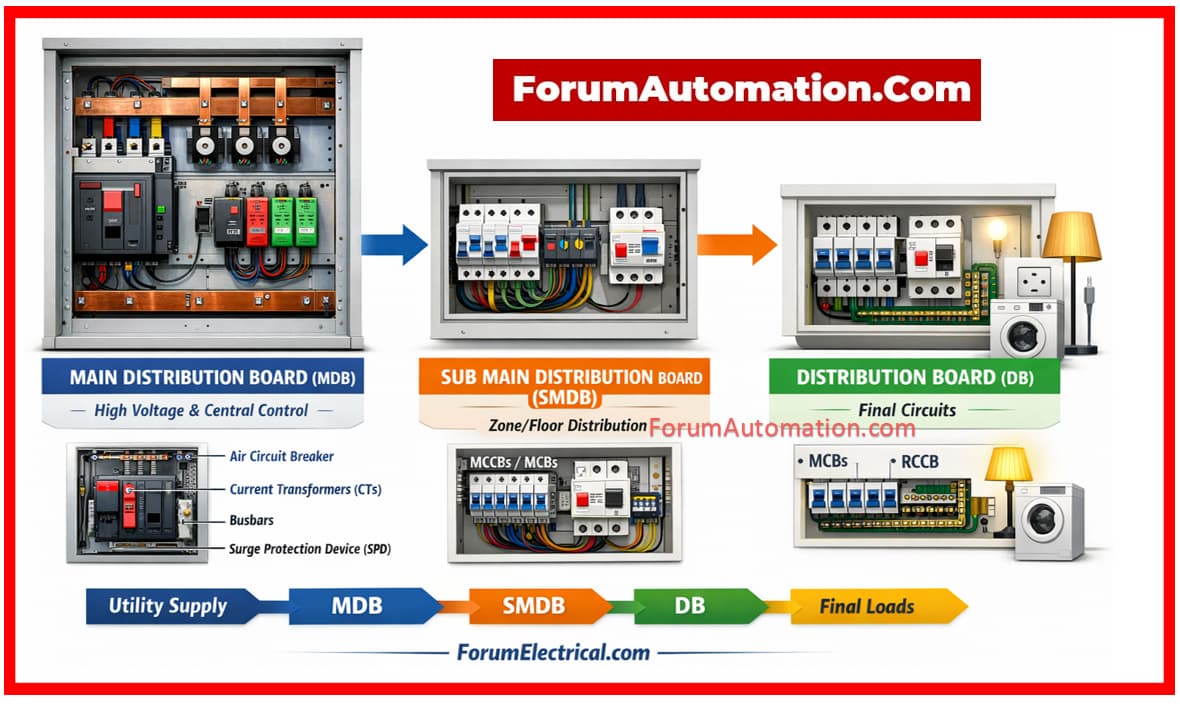
3). Distribution Board (DB)
The DB represents the final stage of power distribution, supplying electricity directly to end loads such as lighting, socket outlets and appliances.
It consists of
- MCBs for circuit protection,
- RCCBs for protection against electric shock and
properly arranged neutral and earth busbars.
Power Flow Simplified
Utility Supply → MDB → SMDB → DB → Final Loads
This arrangement not only improves fault isolation but also ensures an effective load management and higher operational efficiency.