How does a H2S Analyser work?
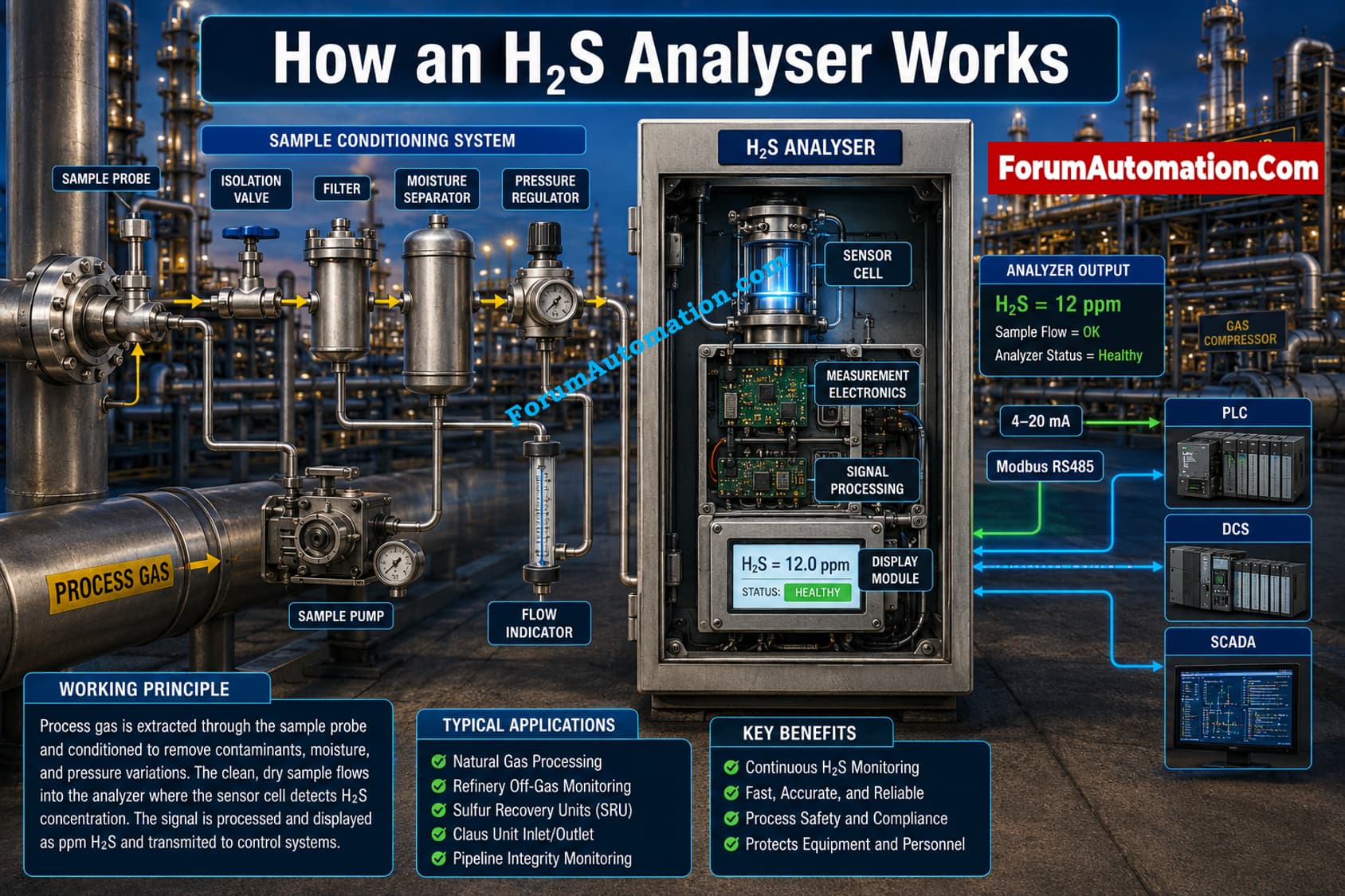
How Does an H2S Analyser Work?
Working Principle
An H2S analyser continuously measures the hydrogen sulfide (H₂S) concentration in gases or process streams. It is widely used for process control and personnel safety in oil and gas, refineries, petrochemical plants, waste water treatment and sulfur recovery units.
Measurement Process
Normal operation of an analyzer comprises the following steps:
- A sample conditioning system removes moisture and particles.
- The analyser chamber is conditioned with gas.
- The sensing element senses the concentration of H 2 S
- The electronics translate the signal to engineering quantities such as ppm or mg/m3.
- The results are delivered to PLC, DCS or SCADA systems by analog or digital transmission.
Common Detection Technologies
Industrial H₂S analysers may use:
- Electrochemical sensors
- UV fluorescence
- Colorimetric tape systems
- Tunable diode laser absorption spectroscopy
- Gas chromatography for laboratory-grade analysis
The choice of technology is based on the desired accuracy, response time, maintenance needs, and process conditions.
Practical Considerations
Proper sample conditioning, regular calibration, sensor verification and routine inspection of filters and sample lines are required for reliable functioning. Clogged sample tubing and dirty sensors can lead to incorrect measurements and delayed alarms.
Industrial Applications
H₂S analysers are frequently installed for:
- Natural gas processing
- Monitoring of Refinery Processes
- Pipeline QC
- Sulfur recovery plants
- Water treatment facilities
- Monitoring environmental emissions
Accurate hydrogen sulfide analysis protects personnel, avoids equipment corrosion, supports environmental compliance and enhances process efficiency. Choosing the right analyser technology and maintaining it appropriately are the keys to dependable long term performance under severe industrial working circumstances.