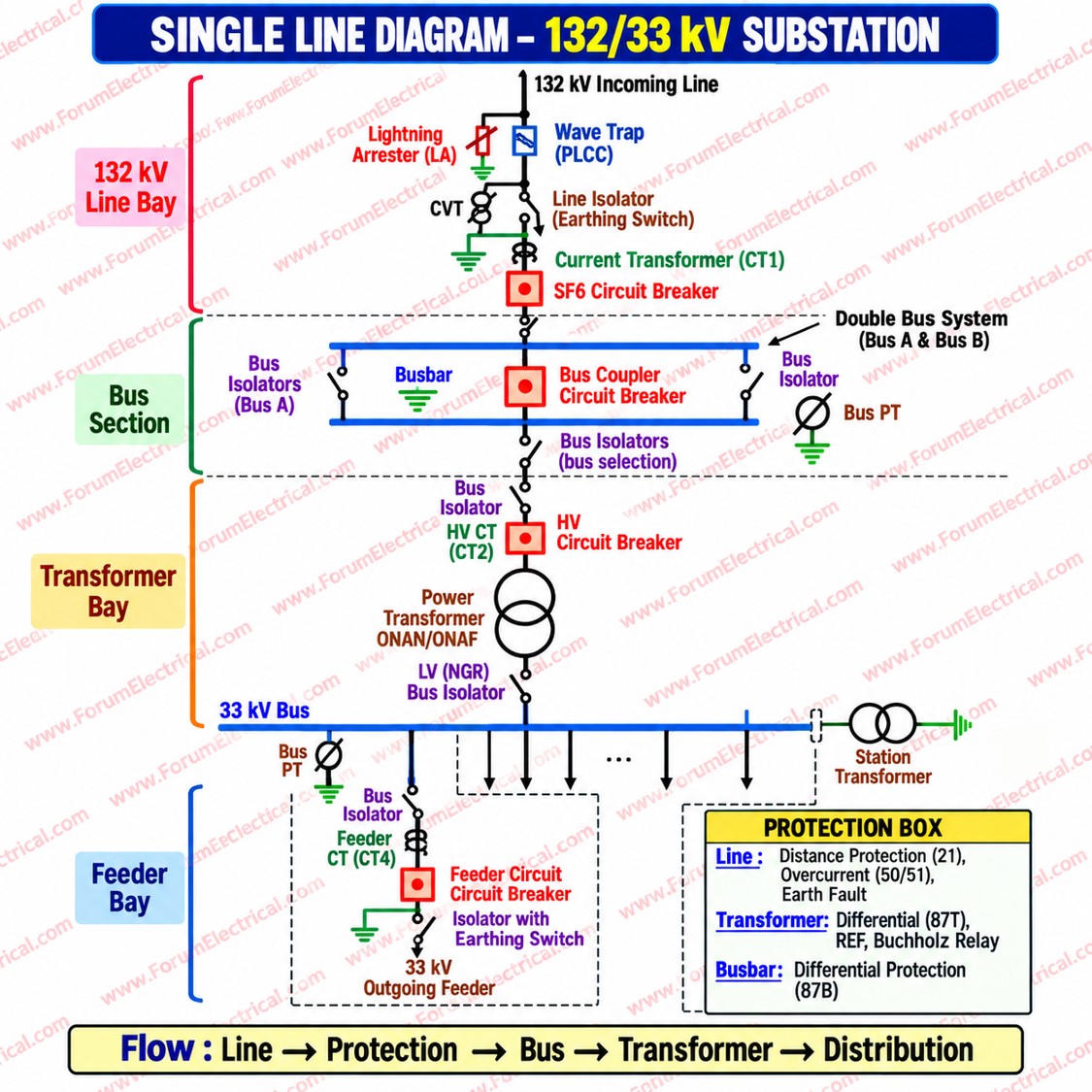
How does a 132/33 kV Step-Down Substation operate?
A 132/33 kV step-down substation receives high-voltage electrical power from the 132 kV transmission network, reduces the voltage to 33 kV through a power transformer, and distributes the electrical power to downstream distribution networks through outgoing feeders. The typical power flow is: 132 kV Transmission Line → Surge Arrester → Isolator → Current Transformer (CT) / Voltage Transformer (VT or PT) → Circuit Breaker → 132/33 kV Power Transformer → 33 kV Busbar → Outgoing 33 kV Feeders. The main equipment and their functions are:
- Surge Arrester: Protects substation equipment by diverting lightning-induced and switching overvoltages to the earth.
- Isolator (Disconnector): Provides visible electrical isolation for maintenance. It is operated under no-load conditions and is not designed to interrupt load or fault current.
- Current Transformer (CT) and Voltage Transformer (VT/PT): Step down primary current and voltage to standardized secondary values for protection, metering, instrumentation and monitoring.
- Circuit Breaker (CB): Makes and interrupts normal load current and clears fault currents under specified operating conditions.
- 132/33 kV Power Transformer: Transfers electrical power through electromagnetic induction and steps down the voltage from 132 kV to 33 kV.
- 33 kV Busbar: Acts as a common electrical connection point for collecting and distributing power to multiple outgoing feeders.
- Outgoing Feeders: Distribute 33 kV electrical power to downstream substations, industrial loads and distribution networks.
- Control and Relay Panel: Houses protection relays, control circuits, metering instruments, annunciation and monitoring systems for safe and reliable substation operation. A 132/33 kV step-down substation ensures reliable power transfer by receiving 132 kV transmission supply, transforming it to 33 kV, and distributing it through protected outgoing feeders.