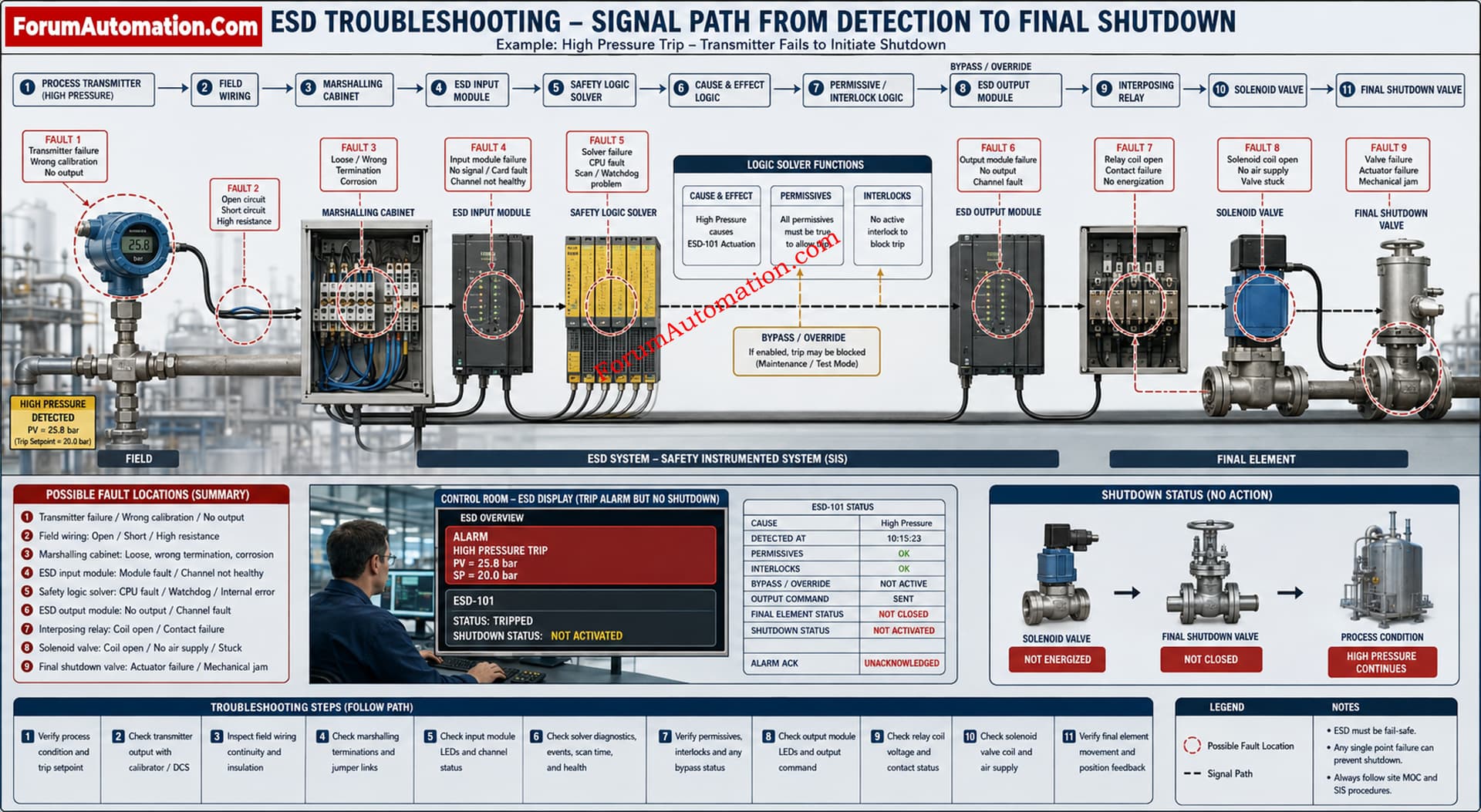
ESD Signal Does Not Initiate Shutdown During a Process Trip
During the plant operation, a crucial process parameter exceeds its configured trip limit and the related ESD signal is expected to activate an emergency shutdown. The field transmitter shows the trip status accurately, however the ESD system does not conduct the shutdown step as planned. Transmitter output, marshaling wires and basic PLC indication seems to be normal.
What would stop the ESD signal from initiating the shutdown sequence? What are the tests on the field signal, input module, logic solver, Cause and Effect logic, permissives, bypasses, and final shutdown output to determine the underlying cause?
ESD Signal Does Not Initiate Shutdown During a Process Trip
Any fault from the field device to the final shutdown element can create an ESD signal that shows a process trip but does not cause the desired shutdown. Troubleshooting should consequently follow the whole signal line and not just the transmitter.
First, verify that the field transmitter is outputting the correct trip signal at the actual setpoint that has been defined. Check the signal at the field termination and compare with the value received by the ESD input module. Check marshaling terminals, cables, barriers, fuses and input module diagnostics for abnormal situations.
Then check the ESD input setup. Verify that the right channel is given to the intended shutdown function and that the logic solver appropriately interprets the input. A misconfiguration or channel assignment issue could prevent a legitimate field signal from initiating the desired operation.
Then the Cause and Effect logic should be checked against the approved shutdown philosophy and current engineering configuration. Verify that no permissives, interlocks, timers, voting logic or other circumstances are obstructing the shutdown instruction.
Another key topic is the ESD bypasses and overrides. The signal may be prevented from reaching the shutdown logic by a maintenance bypass, force, inhibit or temporary override. These conditions should be verified per site approved methods.
Check the ESD output module, interposing relays, solenoid valves, circuit continuity and the final shutdown element. The ESD logic can be working perfectly, but there can be a defect in the final output circuit.
Testing or forcing of ESD signals can impact the safety function and should be investigated under established plant safety procedures.