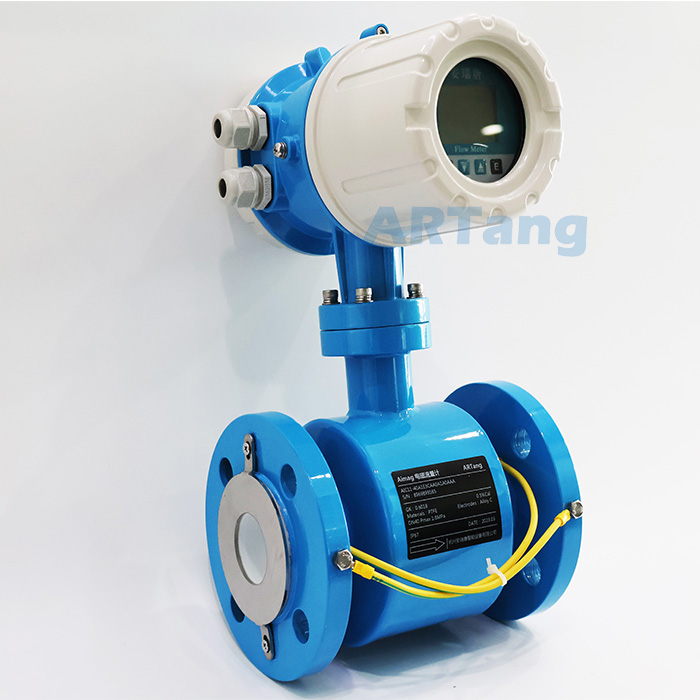
I have krohne IFC 050 magnetic flow convertor in service which measure flow of sodium sulphite. IFC 050 Convertor does not show flow measurement in his display when pipe have flow. No scaling problem. I clean electrode but still showing zero flow when install in line.
Has this flowmeter run properly for some period of time and now has a problem? Or is this a new installation that you are starting up for the first time?
It was run properly from beginning of time.Sometime Scaling problem occured. After remove scaling it was run properly but now it is not Run.
Krohne does not have a troubleshooting section in their converter/transmitter manual. Maybe Krohne thinks the stuff never breaks?
-
Is the display lit up and showing zero flow (when you know there is flow), or is the display dark (How do you know the meter has power) ?
-
Is the meter measuring correctly and providing a valid/good output, like the 4-20mA output, but not showing the correct value in the display? Check the 4-20mA. What is the 4-20mA showing? Is it correct or incorrect?
Mag flowmeter display show zero flow when there is flow in pipe while changing field frequency from 1/6 to 1/2 it show flow but not accurate flow. (because field frequency parameter is not as per flowtube parameter). The upstream of flowtube is feed from pressure pump ( flow from pump is non continues) It gives pulses of flow in sec. There is NRV in downstream of flow tube. (oriented Vertical in vertical pipe).
- No Flow Signal Output Inspection procedure:
- Check whether the transmitter power supply is energized, whether the fuse and all power supply stages are functioning properly, and whether the internal circuit boards of the transmitter are operating normally or reporting any faults.
- Check whether the excitation and signal cables have continuity, whether the wiring is correct, whether the cable shielding is properly grounded, and whether the cable impedance is within the normal range.
- Inspect the insulation of the sensor electrodes and coils, verify that the excitation coil is intact, check whether the electrodes are corroded, whether any internal wiring is broken, and whether the liner is worn or damaged.
- Determine whether surface effects occur between the measured liquid and the electrode material, such as electrochemical or polarization effects, or aerosol formation caused by catalytic reactions.
- Unstable Zero Point Inspection procedure:
- Check whether the piping system where the electromagnetic flowmeter sensor is installed has sources of pulsating flow or flow disturbances.
- Verify whether the pipe is completely filled with liquid and whether the liquid contains air bubbles.
- Check whether the sensor is reliably grounded, whether there is interference from external electric or magnetic fields, and whether the shielding of the excitation and signal cables is properly grounded.
- Check whether the liquid conductivity is uniform and whether the electrodes are contaminated.
- Verify whether the insulation of the signal circuit is normal.