Electrical Clearances in Substation Design: Safety and Insulation Coordination
Electrical clearances are critical design parameters in substation engineering. They ensure adequate insulation distances, prevent electrical flashover, and maintain personnel safety and operational reliability.
Key clearance requirements include:
1. Phase-to-Phase Clearance
Maintains sufficient air insulation distance between energized phases to prevent interphase flashover.
2. Phase-to-Earth Clearance
Provides adequate separation between live conductors and grounded structures to prevent earth faults.
3. Phase-to-Ground Clearance
Ensures the required insulation distance between energized parts and grounded equipment or structures.
4. Vertical Safety Clearance
Maintains safe vertical separation between energized equipment and accessible working or maintenance areas.
5. Horizontal Safety Clearance
Provides adequate lateral separation between live electrical equipment and personnel access or maintenance zones.
Required electrical clearances depend on rated system voltage, highest voltage for equipment (Um), insulation coordination, lightning and switching overvoltages, altitude, atmospheric conditions, and applicable standards.
As voltage levels increase, air-insulation requirements generally increase. Proper clearance selection is essential to prevent dielectric breakdown, maintain safety distances, and ensure reliable substation operation.
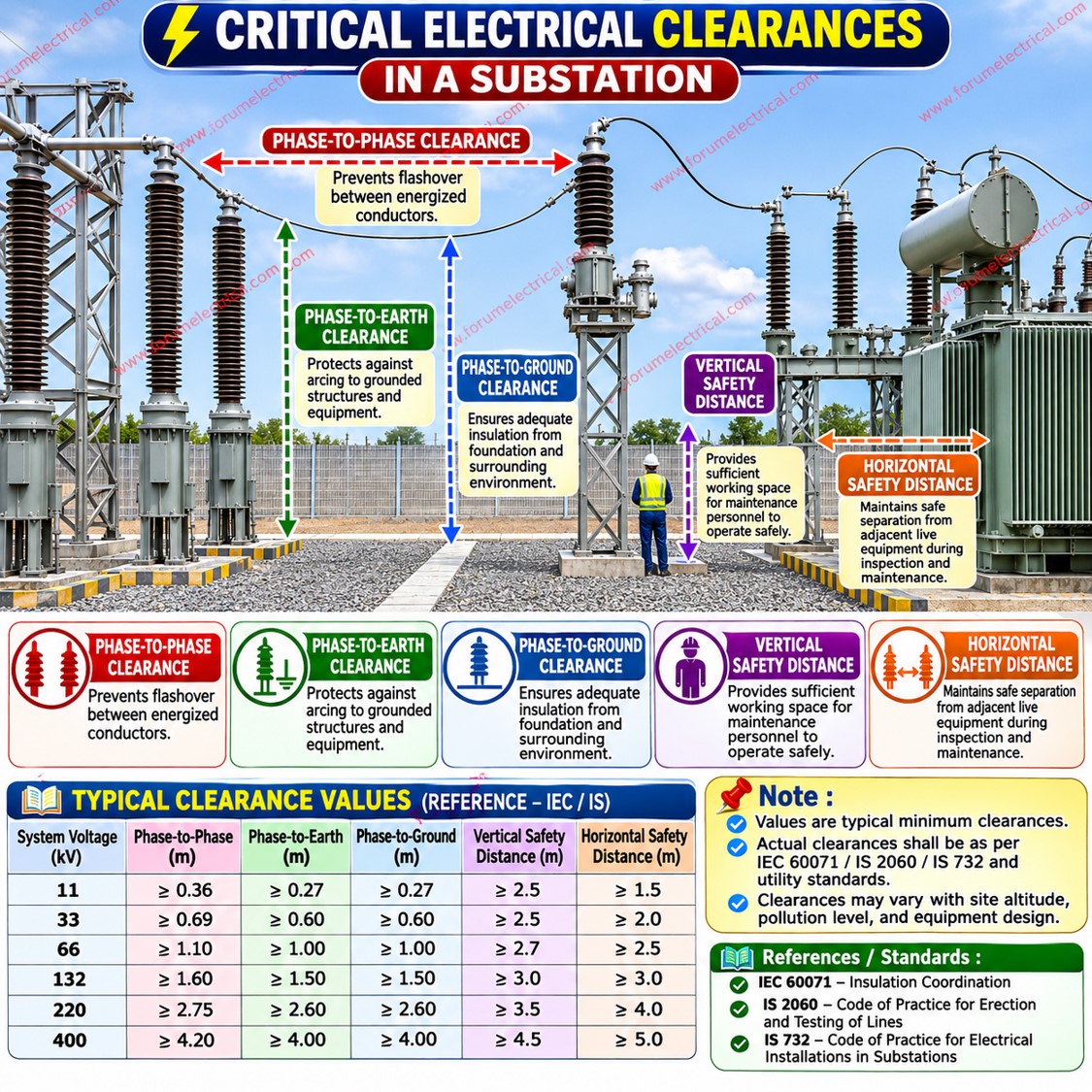
Electrical insulation clearances and personnel safety clearances are different design requirements. Both must be verified independently according to applicable IEC standards and national electrical regulations.