Electrical Cable Sizing
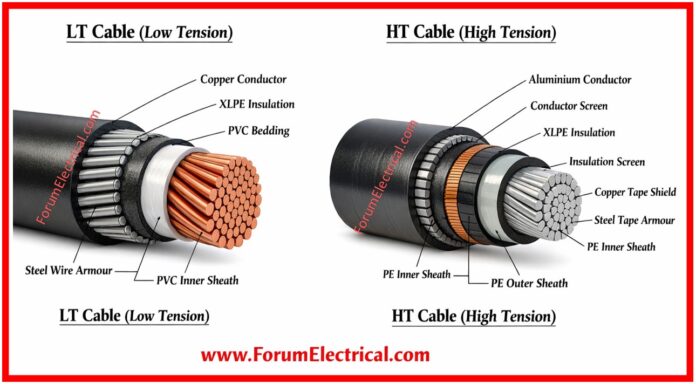
Selecting the correct electrical cable size ensures safe operation, minimizes voltage drop, prevents overheating, and provides adequate short-circuit protection for the entire installation.
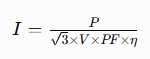
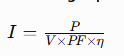
Where:
-
P = Power (Watts)
-
V = Voltage (Volts)
-
I = Current (Amps)
-
PF = Power Factor
-
η = Efficiency
Step 1: Calculate Load Current
For a 3-phase circuit:
For a single-phase circuit:
Step 2: Select the Cable Size
Choose a cable with an ampacity greater than the calculated load current after applying all installation correction factors.
Consider:
-
Ambient temperature
-
Installation method (tray, conduit, buried, etc.)
-
Number of grouped cables
-
Cable insulation type
-
Voltage drop
-
Short-circuit withstand capacity
Step 3: Perform a Voltage Drop Check
For a 3-phase circuit:

Where:
-
L = Cable length
-
R = Resistance
-
X = Reactance
-
ϕ\phiϕ = Power factor angle
The final cable selection must satisfy both the required ampacity and the permissible voltage drop under the actual installation conditions.