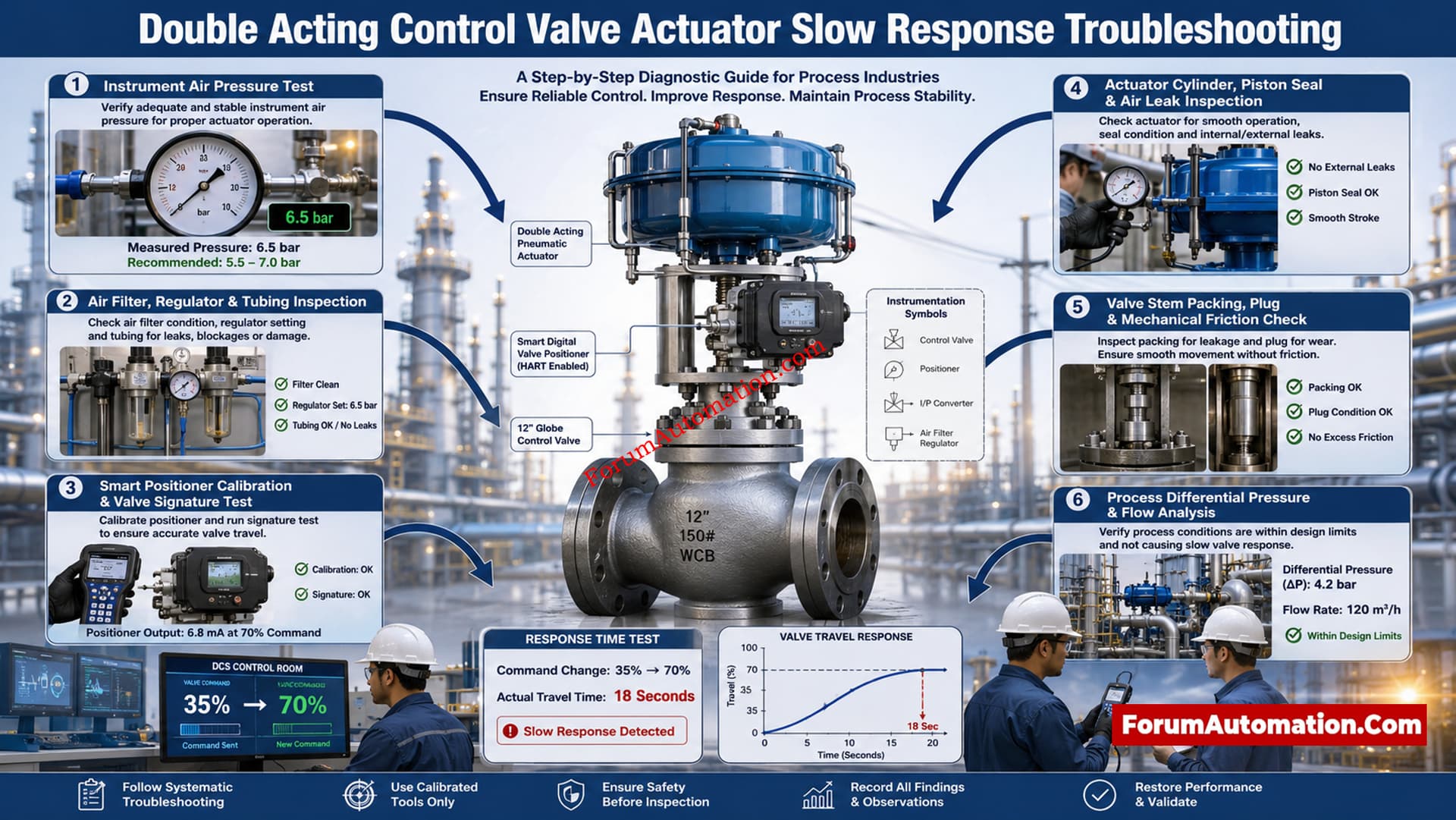
Double Acting Cylinder Control Valve Actuator Slow Response
A refinery uses a 12-inch globe control valve with a double acting pneumatic cylinder actuator to regulate reactor feed flow. During normal operation, the DCS output changes instantly from 35% to 70%, but the valve takes nearly 18 seconds to reach the new position. Instrument air pressure is steady at 6.5 bar, the smart positioner reports no diagnostics or alarms, and the control loop has become sluggish, causing process instability. The actuator and positioner were serviced during the last plant shutdown three months ago.
As the instrumentation engineer responsible for troubleshooting this issue, what would be your systematic approach to identify the root cause? Which pneumatic, mechanical, positioner, instrument air, and process-related factors would you investigate first?
Double Acting Cylinder Control Valve Actuator Slow Response
Never diagnose a sluggish moving double acting pneumatic control valve by instantly replacing components but always in a systematic manner. Start by isolating pneumatic, mechanical and process-related problems since the DCS command changes instantaneously, instrument air pressure is stable at 6.5 bar and the smart positioner does not indicate any alarms. Structured troubleshooting sequence avoids unnecessary maintenance and detects hidden defects successfully.
Check the Pneumatic System
- Measure actuator pressure when stroking, not idle only.
- Check tubing for limitations, moisture, oil contamination, leaks
- Check air filter, regulator, boosters, quick exhaust valves and exhaust ports.
- Make sure there is adequate air flow, since only the right pressure will not make the actuator travel quickly.
Evaluate the Positioner
Check trends for valve travel, calibration, tuning parameters and stroke time. Run an auto signature test if supported. Check the I/P converter output pressure for correct output and good feedback linkage alignment. Smart diagnostics may not be able to sense mechanical friction or limited air flow.
Inspect Mechanical Components
If allowed, disconnect the actuator from the valve and stroke each separately. Check for stem packing adjustment, bent stems, worn guides, damaged piston seals, cylinder friction, coupler alignment and valve trim deposits. Response time will usually rise with excessive packing friction or movement of stuck plug.
Review Process Conditions
Compare actual differential pressure, flow rate and valve thrust needs with design values. Healthy diagnostics do not preclude process accumulation, flashing, erosion, or unanticipated hydraulic forces that may overtax the actuator.
A methodical isolation technique of signal, air supply, positioner, actuator, valve mechanics and process conditions usually finds the root cause, restores rapid valve response, improves control loop stability and prevents reoccurring refinery process disruptions.