Main Electrical Distribution Panel Wiring - Understanding Breaker Box Connections
The distribution panel (breaker box) is where the electricity from the meter enters your home and gets divided into different circuits for
- Lights,
- Outlets,
- Air conditioning,
- Kitchen and other appliances.
Working Principle of Distribution Panel
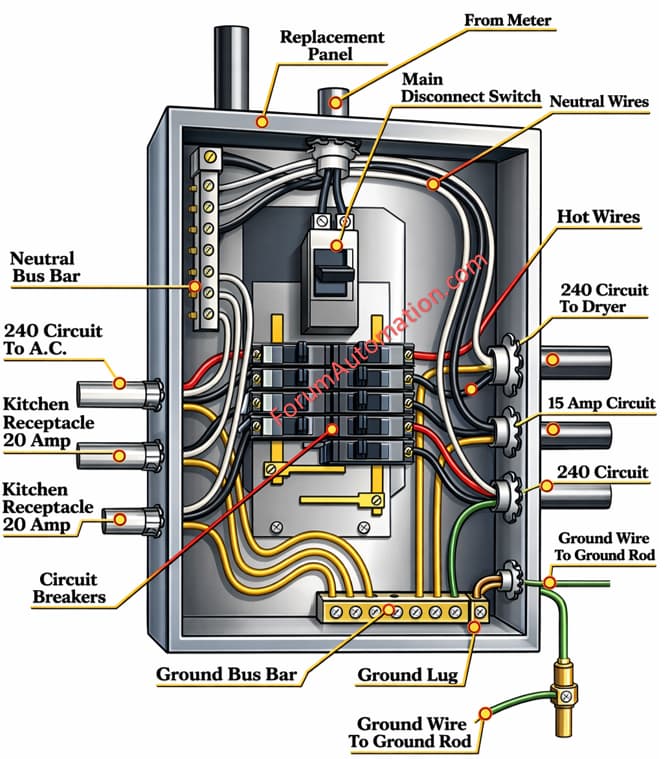
Electricity initially comes from the electric meter into the main disconnect switch which allows you to turn off power to the entire house for safety (as protection).
And next hot wires carry current to the circuit breakers which control and protect individual electrical circuits.
Neutral wires connect to the neutral bus bar completing the electrical circuit.
Ground wires are attached to the ground bus bar which connects to the ground rod & water pipe for safety preventing electric shocks.
If a circuit receives too much current (or) short circuits the breaker trips and cutting off power and also preventing fire hazards.
Primary Components of Distribution Panel
Main Disconnect Switch
Main Disconnect Switch (MDB) turns off the power to the entire house.
Circuit Breakers
Circuit Breakers protects each individual circuit from overload (or) short circuits.
Neutral Bus Bar
Neutral bus bar collects all neutral (return) wires from the circuits.
Ground Bus Bar
Ground bus bar connects all ground wires to the earth for safety.
Hot Wires
Hot wires carry live current from breakers to outlets and appliances.
240V Circuits
Used for high-power devices like AC, dryers and heaters.
5-20 Amp Circuits
Used for lights, fans and kitchen receptacles.
Why Distribution Panel Important?
Distributes electricity safely throughout the home.
Protects all appliances and wiring from short circuits and overloads.
Provides grounding to prevent electrical shocks.
You can also follow us on AutomationForum.co, Facebook and Linkedin to receive daily Instrumentation updates.
You can also follow us on ForumElectrical.com , Facebook and Linkedin to receive daily Electrical updates.