Grounding (Earthing) and Bonding are essential electrical safety practices used to protect people, equipment, and electrical installations against electric shock and electrical faults. However, they perform different functions in an electrical system.
1. Grounding (Earthing)
Grounding is the process of connecting an electrical system or a designated point, such as the neutral point of a transformer or generator, to the earth through a grounding electrode system.
Main Functions:
- Establishes a reference potential for the electrical system.
- Provides a controlled path for ground-fault current.
- Helps stabilize system voltage with respect to earth.
- Supports the operation of protective devices during earth faults.
2. Bonding
Bonding is the process of electrically connecting exposed conductive parts, metallic enclosures, equipment frames, cable trays, conduits, and other conductive components to establish electrical continuity and minimize potential differences between them.
Main Functions:
- Reduces dangerous voltage differences between conductive parts.
- Provides a low-impedance fault-current path.
- Helps protective devices such as MCBs, MCCBs, and fuses operate during faults.
- Reduces the risk of electric shock caused by potential differences.
Difference between Grounding and Bonding
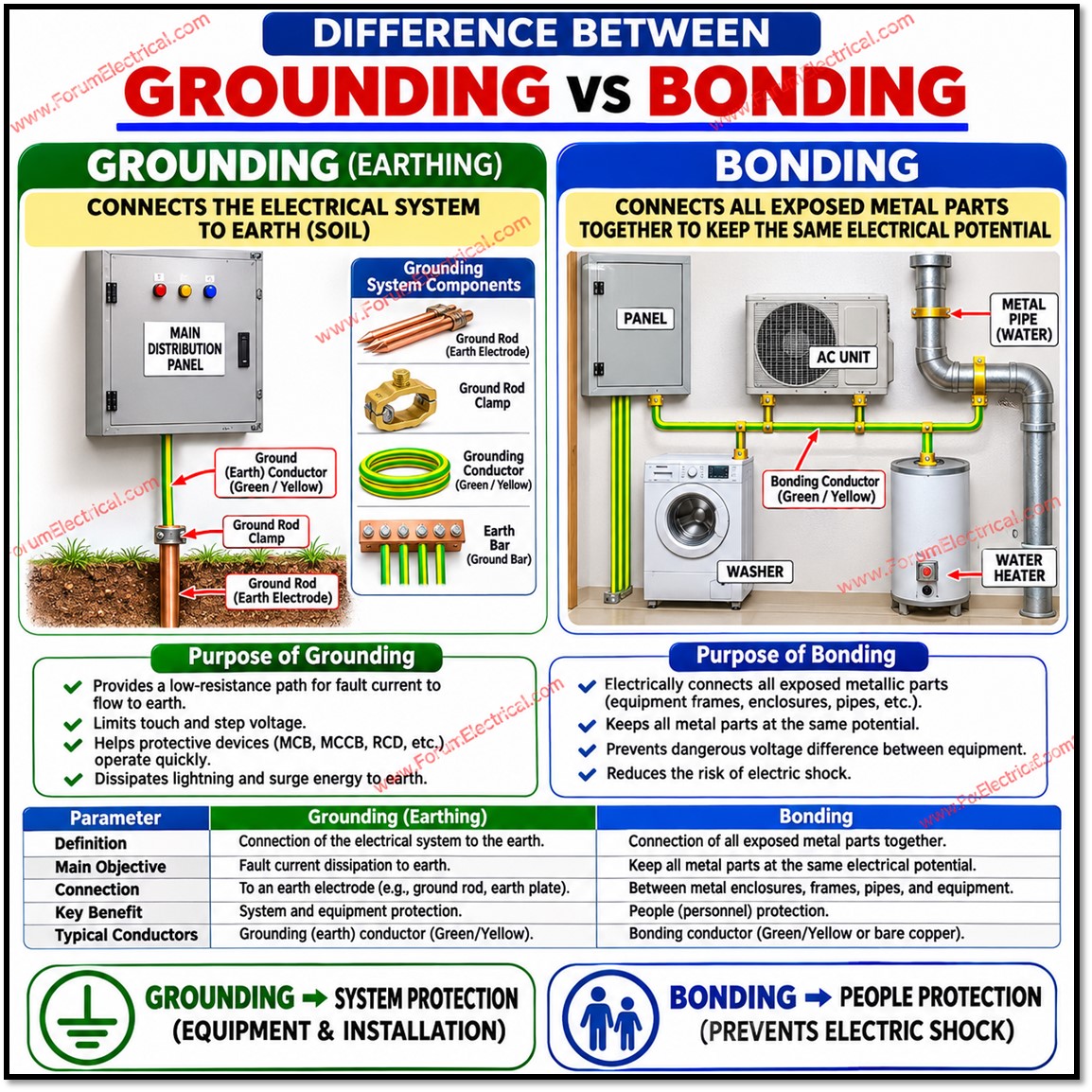
Grounding connects an electrical system to the earth, whereas bonding electrically connects conductive components to maintain equipotential conditions. Both work together to improve electrical safety, ensure effective fault-current paths, and support the reliable operation of protective devices. The actual installation must follow applicable IEC 60364 and local electrical regulations.