Difference between EMF and Voltage
EMF (Electromotive Force) and voltage are both measured in volts (V), but they represent different electrical concepts.
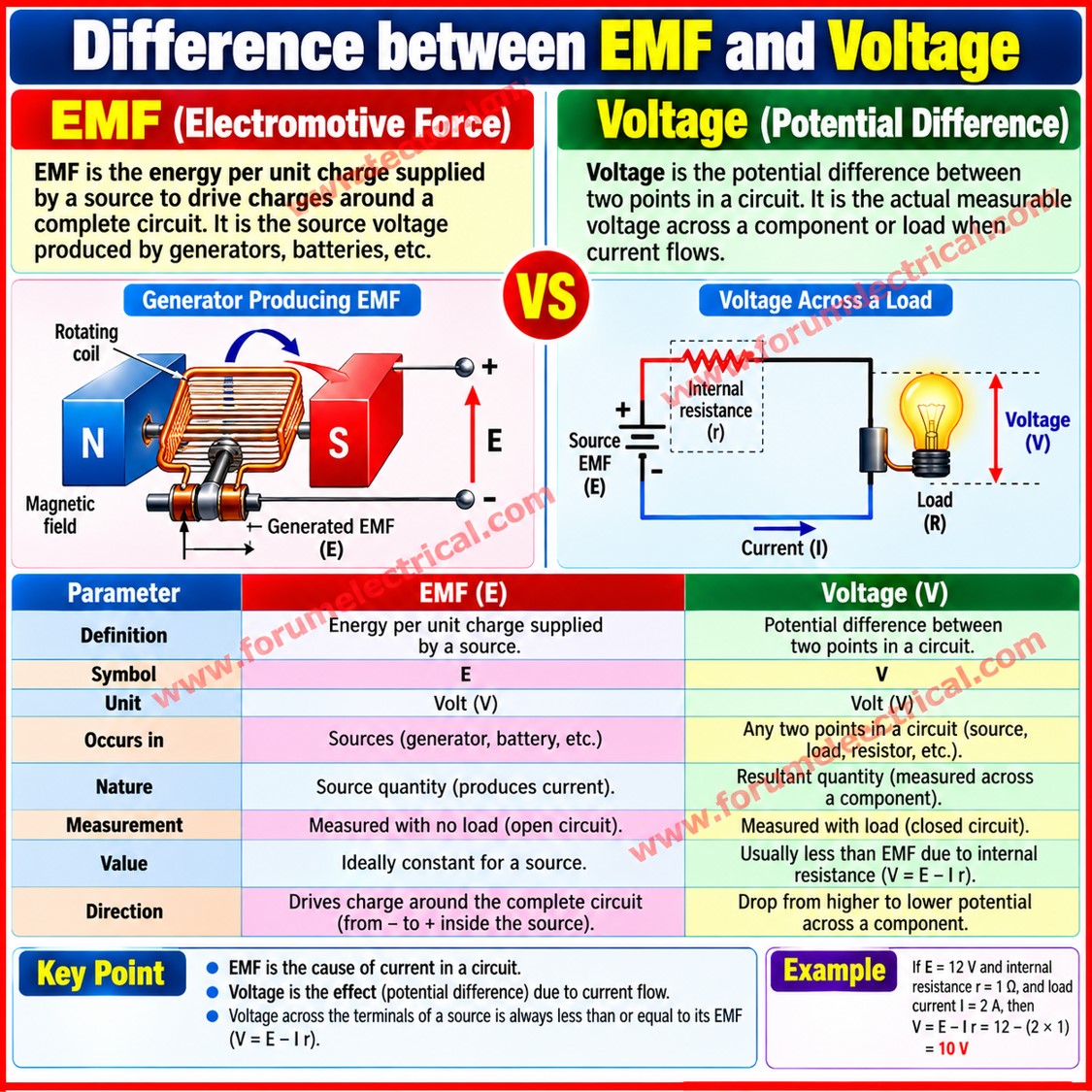
EMF is the energy supplied by a source per unit charge while voltage is the electrical potential difference between two points in a circuit.
| Feature | EMF (Electromotive Force) | Voltage |
|---|---|---|
| Definition | Energy supplied per unit charge by an electrical source | Electrical potential difference between two points |
| Symbol | E or ε | V |
| Unit | Volt (V) | Volt (V) |
| Main Function | Drives electric charge around a circuit | Represents the potential difference that can drive current |
| Measurement | Measured across a source under open-circuit conditions to determine its EMF | Measured between two points in a circuit |
| Under Load | Can differ from terminal voltage due to internal resistance | May decrease across a source’s terminals when current flows |
| Example | EMF generated by a battery or generator | Voltage across a resistor, lamp, or battery terminals |