Difference between Converter and Inverter
Converter vs Inverter
A converter and an inverter are both power electronic devices used to change the form of electrical power.
The key difference is that a converter changes AC to DC, while an inverter changes DC to AC.
Both are widely used in industrial automation, renewable energy systems, electric vehicles, UPS systems, and motor drives.
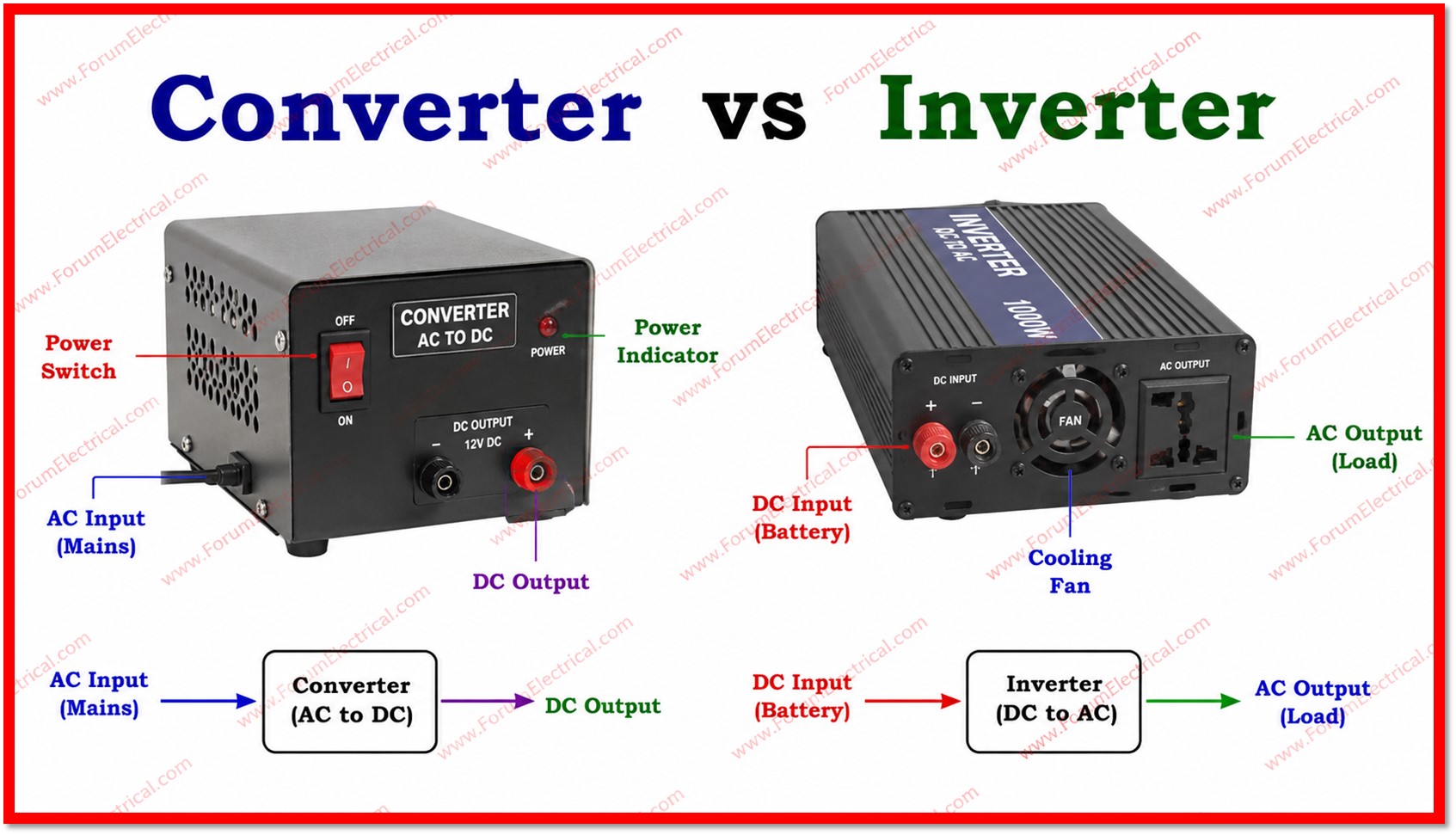
| Parameter | Converter | Inverter |
|---|---|---|
| Definition | Converts AC power into DC power | Converts DC power into AC power |
| Input Supply | Alternating Current (AC) | Direct Current (DC) |
| Output Supply | Direct Current (DC) | Alternating Current (AC) |
| Power Conversion | AC → DC | DC → AC |
| Main Components | Diodes, SCRs, Thyristors, IGBTs | IGBTs, MOSFETs, PWM Controller |
| Output Frequency | 0 Hz (DC) | Adjustable (e.g., 50 Hz, 60 Hz, Variable) |
| Output Voltage | Fixed or Controlled DC | Fixed or Variable AC Voltage |
| Efficiency | High (≈95–99%) | High (≈90–98%) |
| Typical Applications | Battery chargers, DC drives, Electroplating, DC power supplies | UPS, Solar PV systems, VFDs, EVs, Home inverters |
| Example | Mobile charger, DC power supply | Solar inverter, UPS inverter, VFD inverter |
| Energy Flow | AC Source → DC Load | DC Source → AC Load |
| Primary Function | Rectification | Inversion |