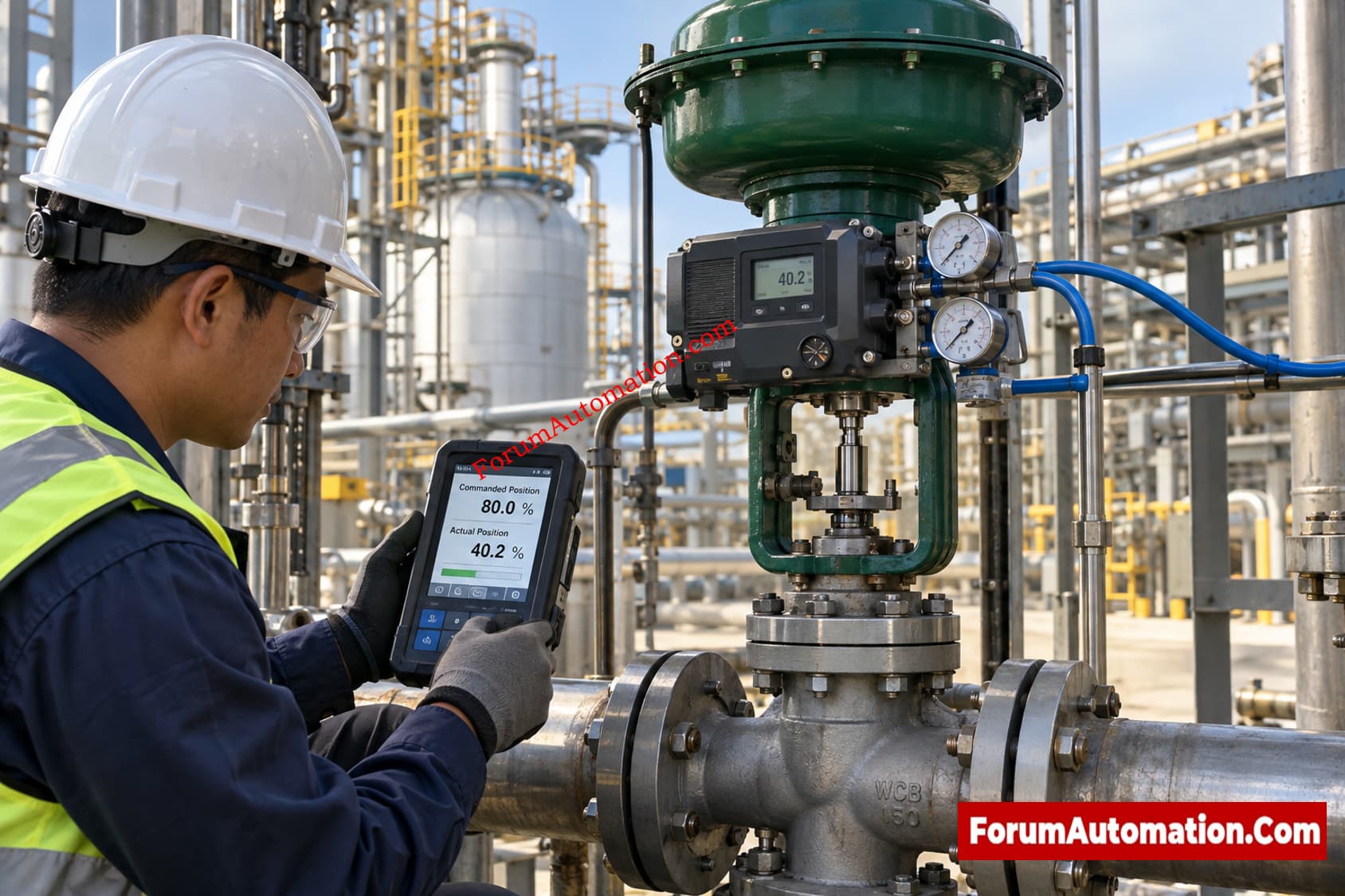
Control Valve Is Not Reaching the Commanded Position. What Should Be Checked?
The control system commands the pneumatic control valve to open 80 percent, but the valve opens only about 40 percent. The positioner shows a difference between commanded and actual position. Instrument air pressure appears normal and there is no major control system alarm.
What should an instrumentation engineer check to identify the actual cause?
When a control valve does not reach its commanded position, troubleshooting should start by comparing the commanded position, positioner output and actual valve travel.
First check the instrument air supply at the positioner and actuator. Normal header pressure does not always mean sufficient pressure is reaching the actuator. Inspect the air filter regulator, tubing, fittings and any restriction in the pneumatic circuit.
Next check the valve positioner. Check zero and span, feedback linkage and configuration, calibration. If the positioner output changes as it should but valve travel doesn’t increase then look at the actuator and mechanical components.
A valve that does not go to the required position can be caused by a sticking valve stem, excessive packing friction, damaged trim, or a mechanical obstruction. In the case of rotary control valves, actuator torque should also be checked. Lack of torque can prevent the valve from moving to the commanded position.
Check signal input and position feedback with the valve having electro pneumatic positioner. Compare positioner interpreted command to control system command. Incorrect scaling can also lead to a perceived position mismatch.
The engineer should also determine if the problem is in the valve travel or at a particular position. If it always stops in the same position, you may have mechanical interference or limits of the actuator.
A practical troubleshooting sequence is:
Control signal → positioner → instrument air → actuator → mechanical valve movement → position feedback.
Avoid immediately replacing the positioner. Comparing each stage of the control valve loop usually identifies whether the problem is electrical, pneumatic, mechanical or calibration related.