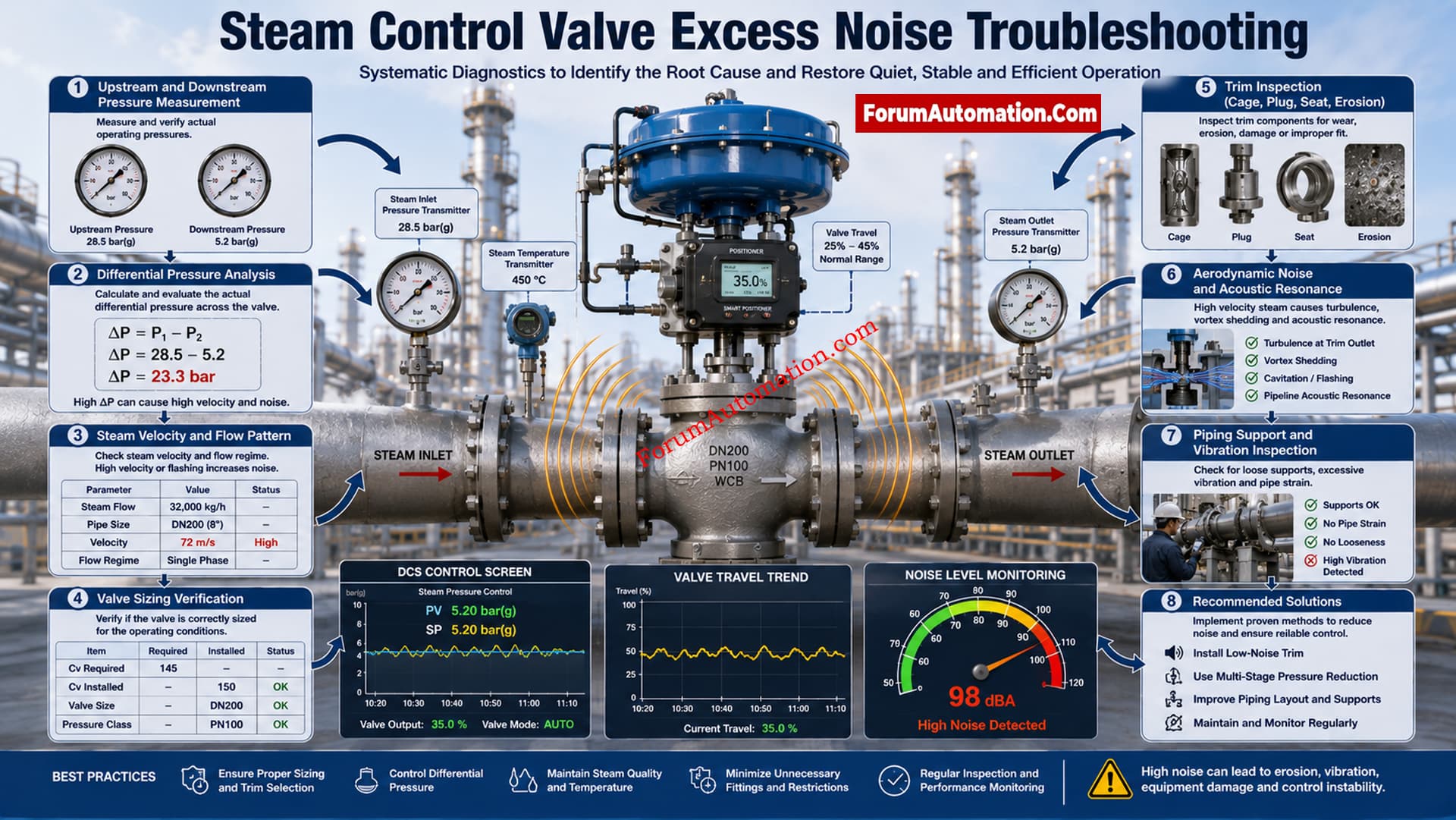
Control Valve Excess Noise
If the steam control valve is running between 25% and 45% open, excessive noise will often be due to a change in flow dynamics rather than an instrumentation issue. If the DCS is in pressure control and the valve position is tracking the controller output properly and there are no alerts. The examination should be into process conditions, valve trim and installation. Systematic evaluation will avoid premature valve failures and plumbing damage.
Review Process Conditions
Check upstream and downstream pressure, steam temperature, mass flow and differential pressure. Compare current operating data to original design values to evaluate if the valve is functioning outside its intended range. High pressure drop can give rise to a large increase in aerodynamic noise…
Inspect Valve Sizing and Trim
Review size calculations, valve characteristic, trim type and rated capacity. A too large valve may have too long a duration at low openings when high velocity jets cause whistling. Examine the trim for erosion, wire pulling, damaged cages, or partially blocked flow passageways.
Assess Mechanical and Installation Factors
Check the actuator stability, stem guidance, packing quality and mounting integrity. Check for vibration or resonance at pipe supports, reducers, elbows and expansion joints nearby. Loose supports might increase normal flow noise.
Evaluate Flow-Induced Noise Mechanisms
Determine whether the noise is caused by aerodynamic turbulence, acoustic resonance, flashing or cavitation. In steam service the main concern is aerodynamic noise as cavitation is a liquid phenomenon. If pressure drop is higher than design recommendations, check for trim upgrades, multiple-stage
pressure reduction, or low-noise cages.
A systematic review of process data, valve sizing, trim condition, installation quality and flow characteristics reveals underlying cause, improves equipment dependability, protects adjacent piping and extends control valve service life.