Electrical inspections are conducted to ensure safety, reliability, and compliance with electrical standards.
However, several common mistakes are frequently identified during inspections.
1). Improper Wiring Practices
2). Overloaded Circuits
3). Faulty or Poor Earthing
4). Non-Compliance with Electrical Codes
5). Missing or Defective Protective Devices
6). Poor Distribution Board Arrangement
7). Lack of Maintenance
8). Unauthorized Electrical Modifications
1). Improper Wiring Practices
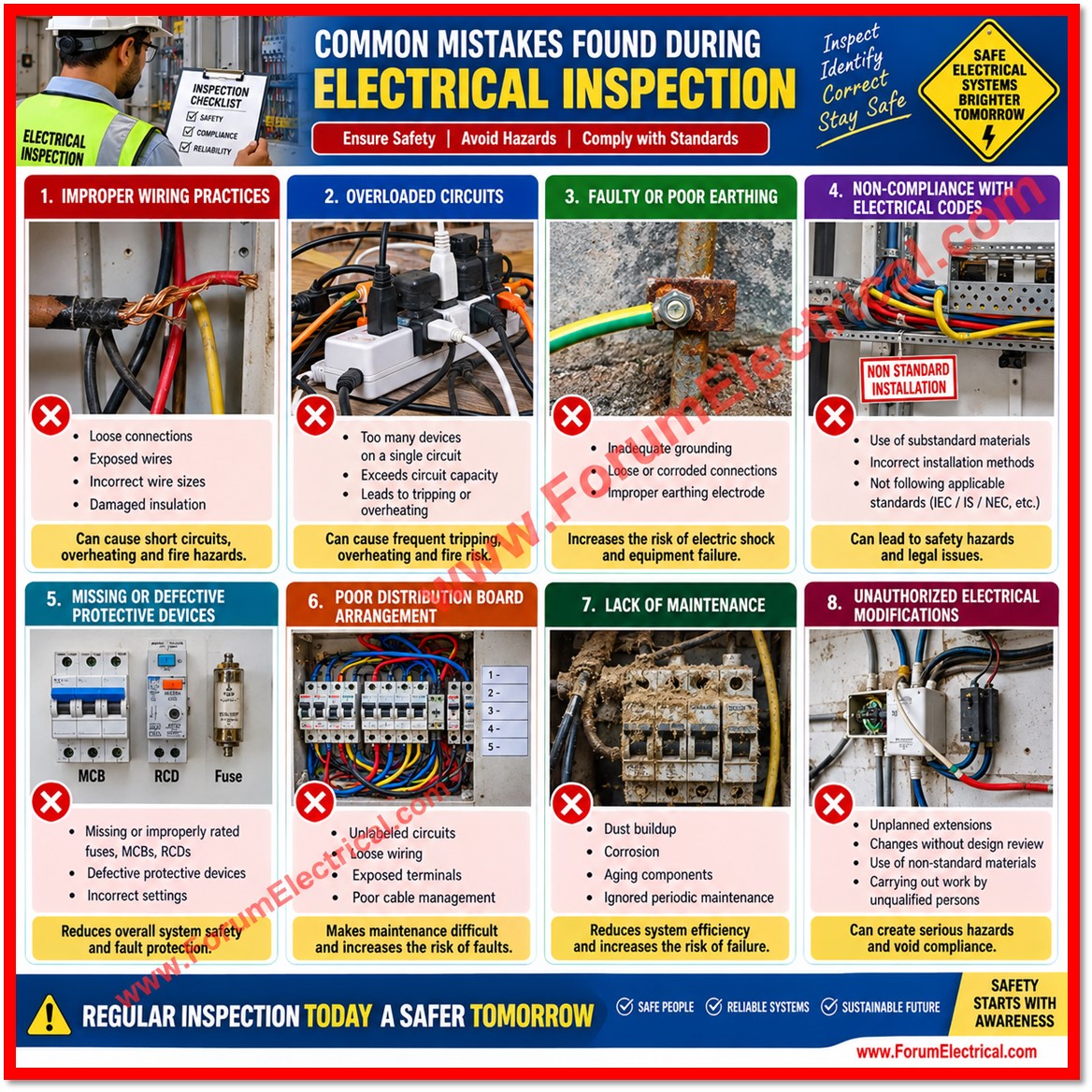
Loose connections, exposed wires, incorrect wire sizes, and damaged insulation are often found. These issues can cause short circuits, overheating, and fire hazards.
2). Overloaded Circuits
A common problem is connecting too many devices to a single circuit, which exceeds its capacity and leads to tripping or overheating.
3). Faulty or Poor Earthing
Inadequate grounding increases the risk of electric shock and equipment failure during faults or lightning events.
4). Non-Compliance with Electrical Codes
Use of substandard materials and incorrect installation methods that do not meet safety standards are frequently observed.
5). Missing or Defective Protective Devices
Improperly rated or missing fuses, circuit breakers, and RCDs reduce overall system safety.
6). Poor Distribution Board Arrangement
Unlabeled circuits, loose wiring, and exposed terminals inside panels are common inspection findings.
7). Lack of Maintenance
Dust buildup, corrosion, and aging components are often ignored, reducing system efficiency and safety.
8). Unauthorized Electrical Modifications
Unplanned extensions or changes to wiring systems without proper design review can create serious hazards.