*Can a combustion analyzer detect carbon monoxide?
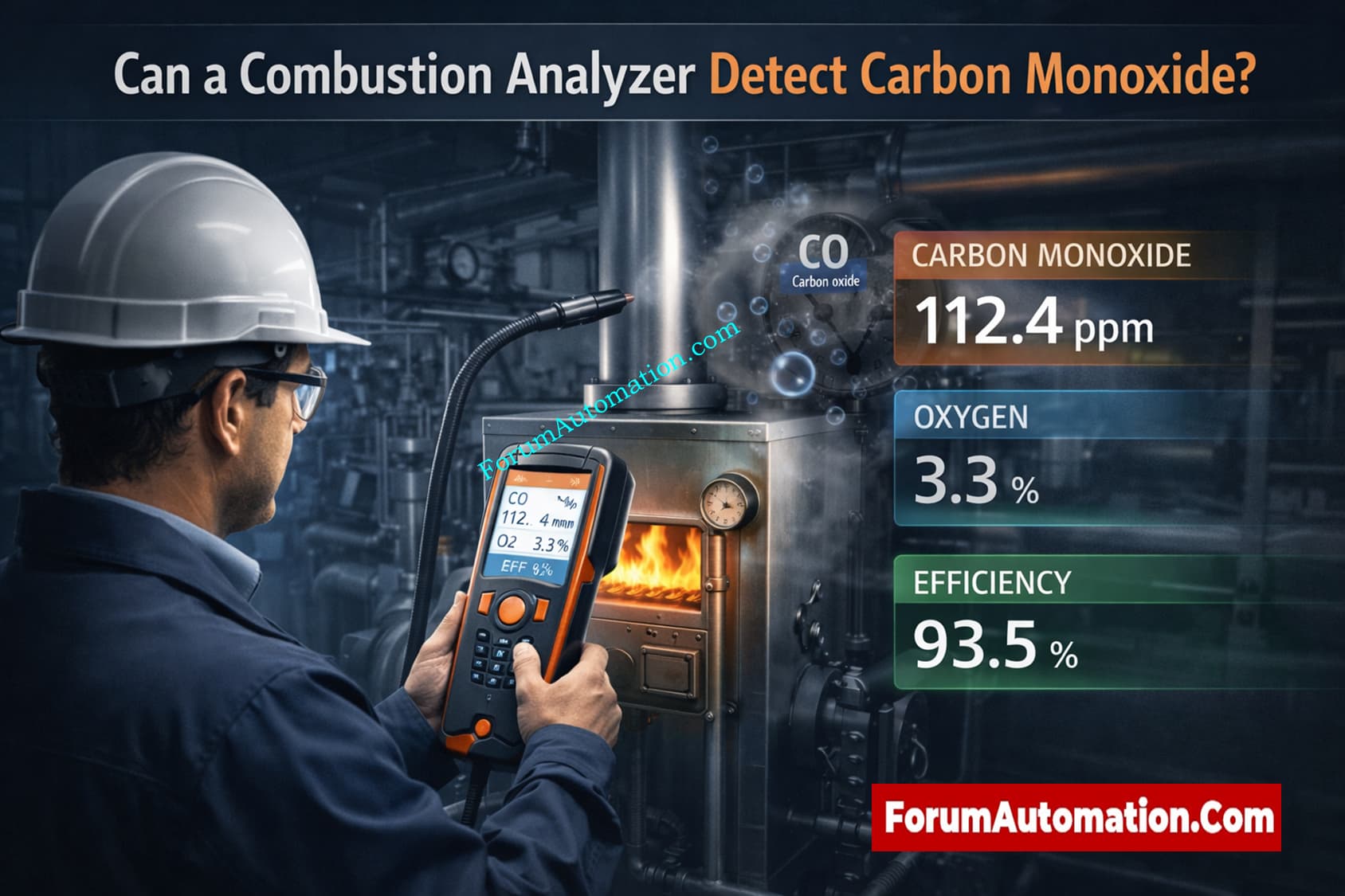
Can a combustion analyzer detect carbon monoxide
Yes, a combustion analyzer can find carbon monoxide, and it is often used for this purpose in industrial and utility systems.
Working Principle
Electrochemical sensors are used by a combustion analyzer to measure the composition of flue gas. These sensors are designed to measure the concentration of carbon monoxide in parts per million. They do this by interacting with the gas and sending out an electrical signal that is proportionate to its amount.
Typical Measurements
Analyzers measure more than just carbon monoxide:
- Oxygen percentage
- Carbon dioxide levels
- Flue gas temperature
- Combustion efficiency
Practical Applications
In boilers, furnaces, and heaters, carbon monoxide detection is critical for:
- Ensuring complete combustion
- Preventing toxic gas exposure
- Optimizing air to fuel ratio
- Reducing emissions
Field Scenario
A high carbon monoxide reading while calibrating the burner means that the fuel is not burning all the way through either there isn’t enough air or the mixing isn’t good. To keep carbon monoxide levels under safe ranges, maintenance professionals change the dampers or the flow of fuel.
Limitations
- Regular calibration is needed for sensor drift.
- Readings can be wrong if there is a lot of moisture or particles in the air.
- There is a chance of cross-sensitivity with other gasses.
Best Practices
- Do zero and span calibration on a regular basis
- Put the probe in the right place in the flue gas stream
- Check readings with reference tools during audits.
Combustion analyzers are very important for finding carbon monoxide, making combustion more efficient, and keeping industrial process systems safe.