Busbar differential protection (ANSI 87B) is a high-speed protection scheme used to detect and isolate internal faults within a defined substation busbar zone. It operates by comparing the vector sum of CT secondary currents entering and leaving the protected zone.
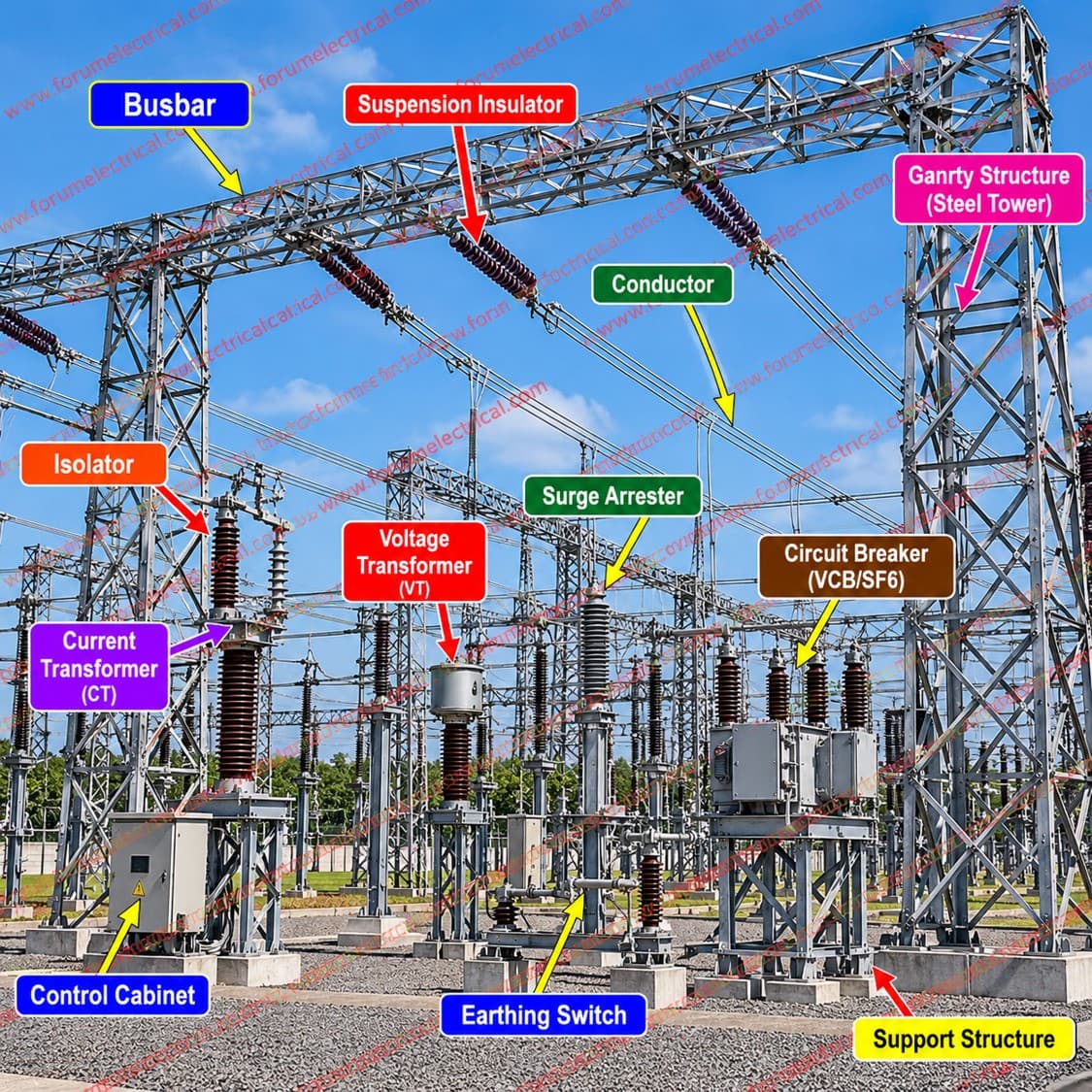
Under normal load and external fault conditions, the differential current should ideally remain near zero. During an internal fault, the resulting differential current exceeds the relay’s operating threshold, initiating circuit breaker tripping to isolate the affected busbar section.
Main Types:
-
High-Impedance Differential Protection
-
Low-Impedance Differential Protection
-
Check-Zone Protection
Key Engineering Considerations:
-
CT ratio, polarity and saturation characteristics.
-
Differential and bias/restraint settings.
-
Busbar zone selection and disconnector status.
-
CT secondary wiring and stability during external faults.
-
Circuit breaker trip logic and breaker-failure protection (50BF).