Electrical measuring instruments are devices used to measure electrical quantities like voltage, current, resistance, power, energy and frequency. They help in monitoring, controlling and analyzing electrical systems for safe and efficient operation.
Importance of Electrical Measurements
Measurements ensure safety, reliability and efficiency. They help detect faults, avoid overloading and maintain proper system performance. They are essential for energy management and system improvement.
Need for Accurate Measurement
Accurate measurement gives correct data for decision making, design and operation. Inaccuracy may cause equipment damage, energy loss, safety hazards and financial loss.
Applications of Measuring Instruments
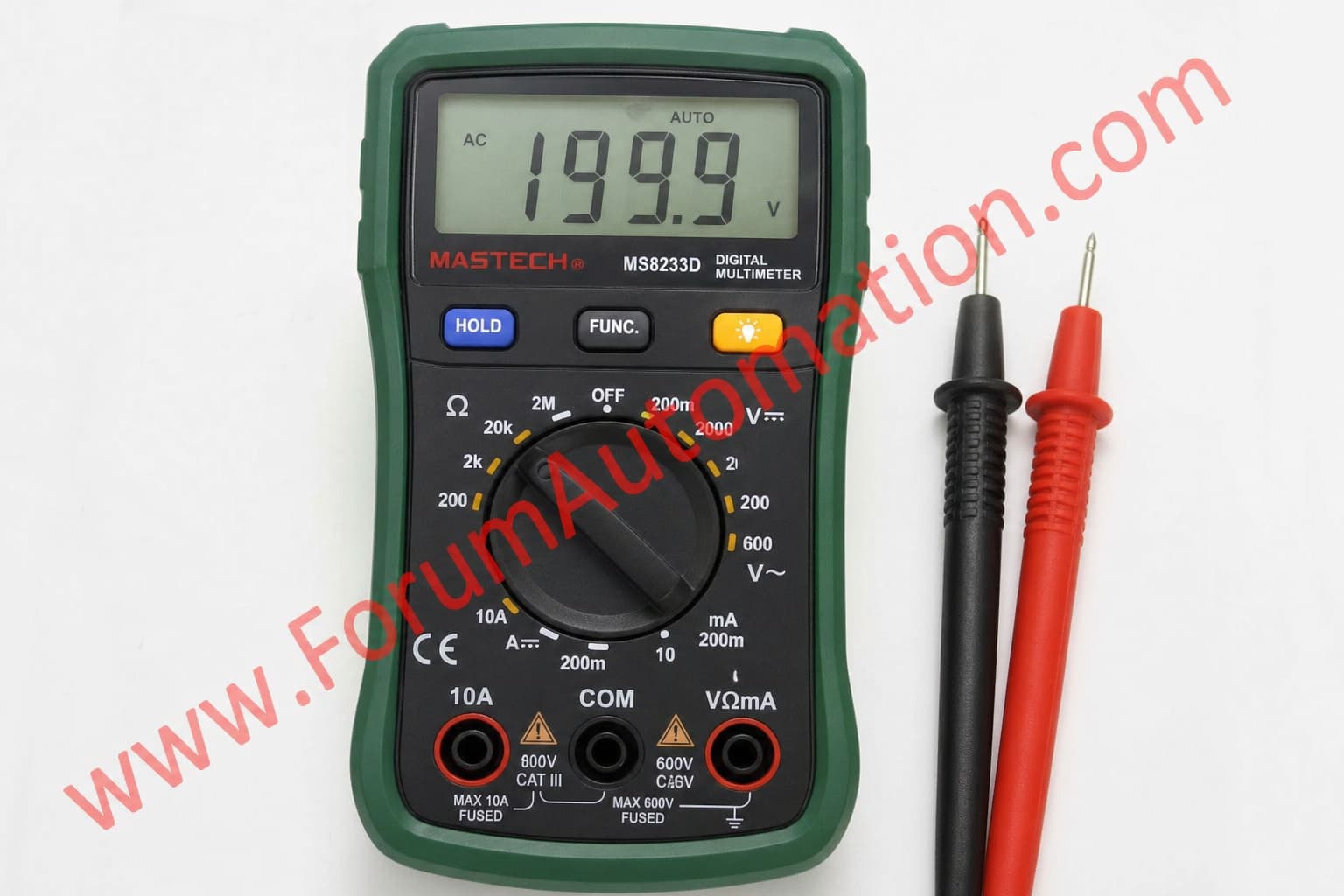
Used in power generation, transmission, industries, laboratories and maintenance. They help in testing, monitoring, troubleshooting and improving system performance.
Role in Industries
Instruments provide real-time data for process control, protection and energy management. They improve productivity, ensure safety and reduce downtime.
Classification of Measuring Instruments
Classified based on current (AC/DC), principle (PMMC, MI), method (absolute/secondary), output (analog/digital) and application (industrial/lab).
Absolute vs Secondary Instruments
Absolute instruments measure directly and are used in labs. Secondary instruments measure indirectly and require calibration; widely used in practice.
Deflecting, Controlling and Damping Systems
Deflecting system produces torque to move the pointer. Controlling system opposes it and stabilizes the pointer. Damping system prevents oscillations and ensures quick steady reading. At equilibrium, deflecting torque equals controlling torque.